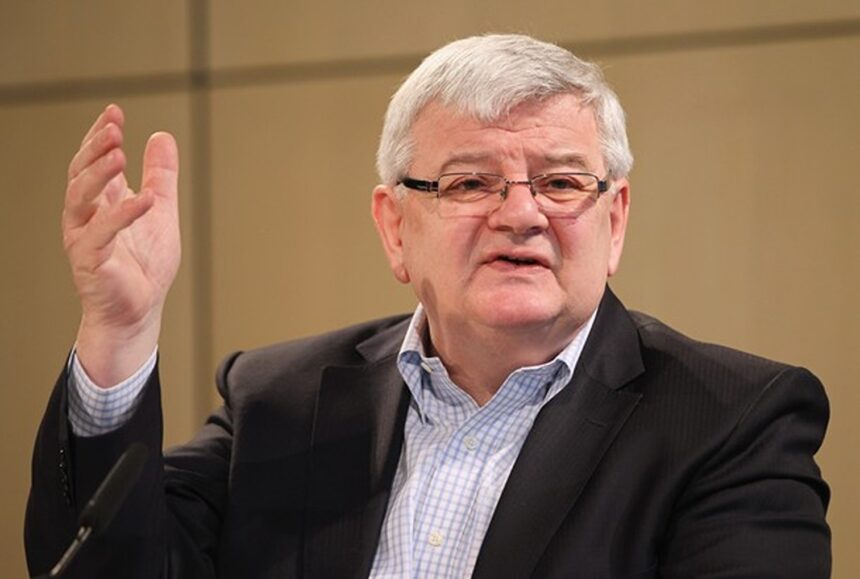
In an interview with Der Spiegel, Joschka Fischer firmly defends his 1999 decision to support military intervention against the regime of Slobodan Milošević, describing it as a historical necessity to prevent another genocide on European soil.
The former German foreign minister expressed deep skepticism about the future of the geopolitical order, questioning the survival of NATO as a transatlantic alliance under the influence of Donald Trump. Fischer described the U.S. president as a deeply polarizing figure and argued that his policy toward Iran has failed, further strengthening radical elements in Tehran.
According to Fischer, trust in the United States as a security guarantor has been irreparably damaged, and Europe can no longer rely on protection from across the Atlantic, regardless of who occupies the White House in the future. This new reality, he argues, forces Germany and Europe to fundamentally reassess their military strength, including strengthening conventional capabilities and opening an unavoidable debate on a potential European nuclear alternative in cooperation with France and the United Kingdom.
Fischer devoted the most emotional part of the interview to Kosovo, which he considers a turning point that reshaped Germany’s military role after World War II. He strongly defends the 1999 intervention against Milošević’s regime as necessary to prevent a new genocide in Europe.
He explained that the bitter experience of the Srebrenica massacre was the decisive factor that convinced him diplomacy alone was insufficient in the face of aggressive nationalism ready to commit mass terror and systematic killings. He stressed that if Milošević’s regime had been allowed to implement its agenda in Kosovo, not only would the Albanian population have been destroyed, but the idea of a united Europe and the process of Balkan enlargement would have been permanently damaged.
Although heavily criticized at the time, even within his own party, Fischer insists that comparisons with the horrors of Nazism were justified in the context of preventing crimes against humanity. He acknowledged it took time to fully understand the nature of the conflict but denied acting hastily, emphasizing that mass expulsions and violence by Serbian forces in Kosovo were undeniable realities requiring immediate military response.
Regarding Russia, Fischer said the West had illusions about lasting peace after the fall of the Berlin Wall, but noted he personally never trusted Vladimir Putin. He pointed to the brutality of the war in Chechnya and Putin’s harsh reaction to the Orange Revolution as clear warning signs.
Today, he expressed satisfaction that the Green Party has maintained a realistic course and solidarity with Ukraine, moving away from what he described as dogmatic pacifism.
In conclusion, Fischer delivered a clear message: Germany must grow within the European framework and assume greater military responsibility—without falling into nationalism—becoming a pillar of defense for a continent that must now learn to stand without American support.