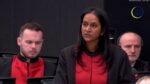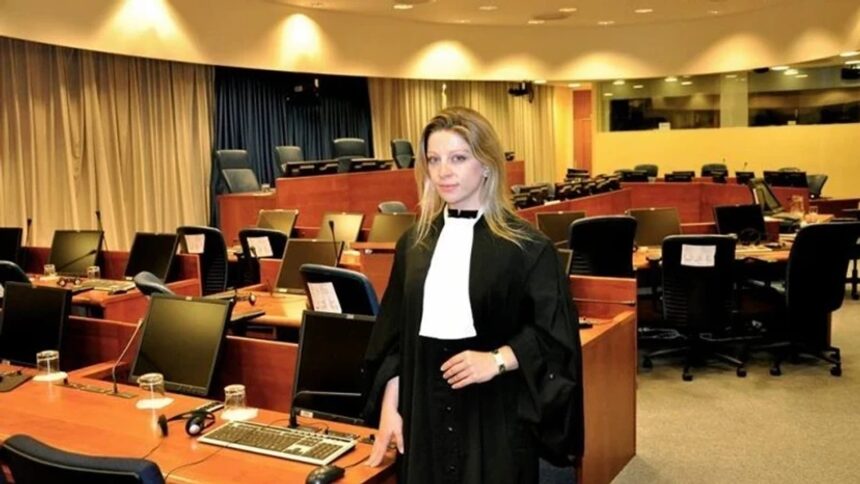
Rudina Jasini, a former defence lawyer for Rexhep Selimi at The Hague, has shared details of the proceedings before the Kosovo Specialist Chambers in The Hague against four former Kosovo Liberation Army (KLA) leaders.
Speaking on the “Now” programme on Euronews Albania, Jasini described the defence as having faced a difficult trial and raised concerns about the way the proceedings and evidence were handled.
According to Jasini, in some instances, judges asked questions that went beyond those presented by the prosecution. She also claimed that some of the documents used during the proceedings had been provided by Serbia.
“How could the judges ask questions that went beyond the prosecution’s questions, in search of what is true? The German judge was not even a judge in Germany, but a former prosecutor. It is absurd to ask questions beyond what the prosecution is seeking,” Jasini said.
She also said the defence faced a large number of legal professionals on the prosecution side and argued that the way the prosecution presented its case created confusion.
“Some of the documents were given to this court by Serbia. We faced an army of prosecution lawyers, which from the beginning had a certain predisposition in how it approached the indictment. The defence did its maximum given the circumstances,” Jasini said.
She further argued that the prosecution’s presentation of the case made it difficult to follow, with witnesses allegedly being connected to different incidents from different periods of the 1998–1999 Kosovo War.
“The way the prosecution presented it was that one witness could have a connection to an issue from 1998, while another within the same week had to do with a different issue from 1999. The whole thing was to create as much confusion as possible,” she said.
Another issue raised by Jasini concerned the evidence admitted during the trial. She claimed that more than 130 witnesses were accepted on the basis of written statements without appearing in court to have their testimony directly tested.
“More than 130 witnesses were accepted solely on the basis of written statements, meaning their testimony was not tested in the courtroom,” Jasini said.