The European Parliament has approved a new strategy for the enlargement of the European Union, emphasizing that expansion is a strategic response to changing geopolitical realities and a long-term investment in the security and stability of the European bloc.
According to the document adopted on March 11, the cost of failing to expand the EU would exceed the cost of admitting new members, warning that delays could create geopolitical “gray zones” vulnerable to hostile foreign influence. The strategy was adopted with 385 votes in favor, 147 against, and 98 abstentions.
The report’s author, Lithuanian MEP Petras Auštrevičius, said that given today’s geopolitical challenges, the EU integration model must evolve to better reflect both the bloc’s interests and the expectations placed on candidate countries.
“EU enlargement must go hand in hand with internal reforms to protect the functioning of the Union and improve decision-making processes,” Auštrevičius said, adding that greater use of qualified majority voting should be considered. He stressed that the EU should complete these reforms by the time candidate countries meet membership criteria and are ready to join.
Western Balkans Progress and Kosovo’s Position
The report notes that Albania and Montenegro have already set ambitious targets to complete EU accession negotiations by 2026–2027.
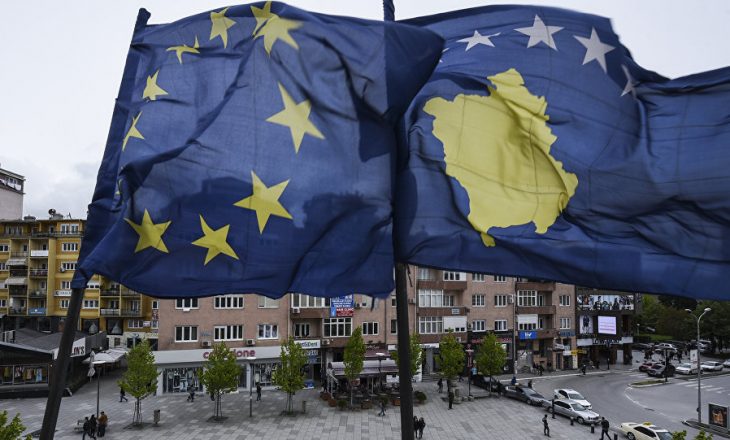
Meanwhile, Kosovo applied for EU membership in 2022, but its application has not yet been formally reviewed. As a result, Kosovo remains the only country in the Western Balkans that does not currently hold EU candidate status.
When referring to Kosovo, the report highlights the importance of the dialogue with Serbia as a key factor for progress toward EU membership. The normalization process between the two countries is seen as essential for advancing Kosovo’s European integration path.
Rule of Law and Alignment With EU Policies
The strategy stresses that rule of law, democratic reforms, media freedom, minority rights, judicial independence, and the fight against corruption must remain at the top of enlargement priorities, alongside continued support for civil society.
It also underlines the importance of candidate countries aligning with the EU’s Common Foreign and Security Policy, describing this as a key indicator of a country’s geostrategic orientation.
In this regard, Serbia has often faced criticism for failing to align with EU foreign policy, particularly because it has not imposed sanctions on Russia following the invasion of Ukraine.
Warning Against “Trojan Horses” in the EU
Ahead of the vote, a debate was held in the European Parliament with the participation of the EU Commissioner for Enlargement, Marta Kos. She warned that the EU will not allow countries that could undermine its values or institutions from within to join the bloc.
“There are no Trojan horses. Countries that could undermine us from within cannot become members of the EU,” Kos said. “States joining the EU must be strong democracies capable of resisting the toxic influence of Russia and others.”
The European Union last expanded in 2013, when Croatia became the bloc’s newest member.