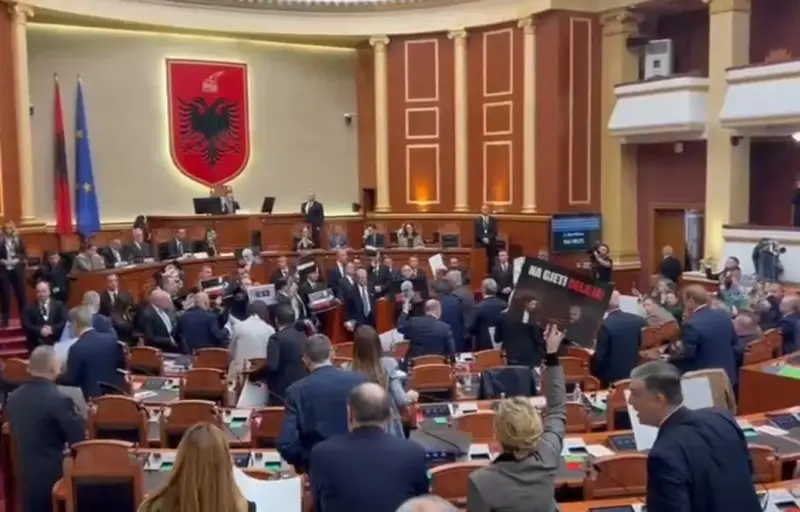
The Parliament of Albania has voted against a request by the anti-corruption prosecution to lift the parliamentary immunity of Socialist MP Belinda Balluku, a move that would have allowed authorities to proceed with her arrest.
The request was submitted by the Special Structure Against Corruption and Organized Crime and was debated during Thursday’s plenary session, which was also attended by Prime Minister Edi Rama.
Following the presentation of two parliamentary reports — one by Ulsi Manja representing the ruling Socialist Party and another by Oerd Bylykbashi from the opposition Democratic Party — the matter was put to a vote.
The final result was 82 votes against lifting the immunity and 47 votes in favor, effectively blocking the prosecution’s request.
Political Debate and Protests
The plenary session focused on the request submitted by prosecutors on December 16 last year. At the same time, opposition supporters staged a protest outside the parliament building, criticizing the ruling majority for protecting Balluku from arrest.
During the debate, lawmakers expressed sharp political disagreements over the issue.
Representatives of the ruling Socialist Party argued that Balluku no longer holds an executive position in government and that SPAK’s investigation can continue without the need for pre-trial detention.
The opposition, however, warned that there is a risk she could influence witnesses or interfere with evidence if she remains free during the investigation.
Tender Irregularities Allegations
Balluku, a former Minister of Infrastructure and Energy, is accused by SPAK of “violating equality in public tenders or auctions.”
The allegations primarily relate to the tendering process for the construction of the Llogara Tunnel, a major infrastructure project in southern Albania.
According to prosecutors, a specific company may have been favored during the tender process, raising concerns that not all bidders were treated equally.
Investigations also extend to several road infrastructure projects in the capital Tirana, including the Shqiponja Square – New Boulevard – Shkozë segment and parts of the Tirana Outer Ring Road.
The case has further intensified political tensions in Albania, with opposition parties accusing the ruling majority of shielding officials from corruption investigations, while the government insists that legal procedures must respect parliamentary rules and due process.