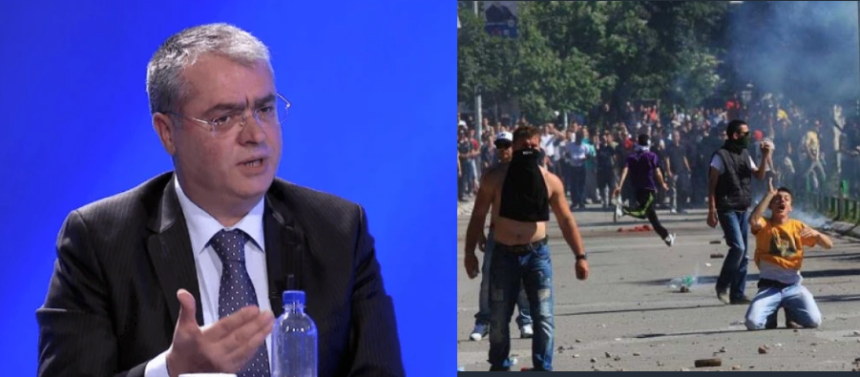
Arben Fetoshi, Director of the OCTOPUS Institute for Hybrid Warfare Studies, described the March 2004 unrest in Kosovo as the most serious post-war episode, emphasizing the need for a thorough analysis of the events.
In an interview on the “FIVE” program in Dukagjin, Fetoshi stated that the incidents should be examined through two main dimensions: the direct consequences and the underlying direction of the civilian revolt.
He noted that the second aspect raises questions about factors that may have influenced the escalation of the unrest.
Fetoshi highlighted that the March 2004 events were later framed in Serbian narratives as a “pogrom,” affecting international perception and exposing shortcomings in the handling of the situation by both local and international institutions.
According to him, public dissatisfaction had accumulated over a prolonged period, primarily due to delays in resolving Kosovo’s political status.
As a trigger for the outbreak of violence, Fetoshi pointed to the drowning of three Albanian children in Mitrovica, an incident at the time reported as the result of a pursuit by a group of Serbs.
However, he emphasized that the lack of a comprehensive and conclusive investigation has left room for different interpretations regarding what occurred on March 17–18, 2004.
The analysis conducted by his institute suggests that elements of a “cost-benefit” scenario may have been involved, citing earlier statements by Goran Bogdanović and claims of the involvement of Serbian security structures.
Fetoshi added that various reports also mention the possibility of infiltration by individuals linked to the Serbian BIA, influencing the orientation of the civilian revolt during that period.