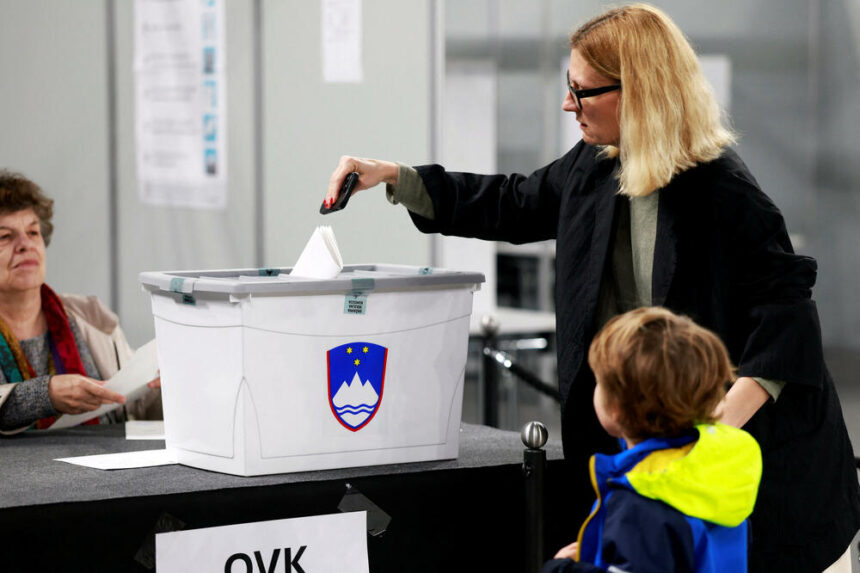
In an opinion piece for The Guardian, Slovenian writer Ana Šnabl argues that Slovenia’s upcoming parliamentary elections represent more than a routine democratic process, describing them as a fundamental choice about the country’s political direction.
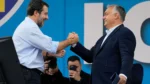
Under the headline “Why Slovenia, as a small and stable country, is turning away from liberalism,” Šnabl warns that Janez Janša—“armed with Viktor Orbán’s ruthless political playbook and the style of Donald Trump”—could pose another illiberal threat to the European Union if he wins the March 22 election.
The outgoing coalition, led by centre-left Prime Minister Robert Golob, has remained in power for a full term—an achievement considered rare in Slovenia’s fragmented political landscape. Golob’s Freedom Movement, founded just months before the 2022 elections, secured 41 out of 90 parliamentary seats, the strongest result for a single party since independence. This allowed him to form a governing coalition with the Social Democrats and the Left, holding 53 seats.
While Golob’s government has faced criticism for limited governing experience and occasional improvisation, it has delivered tangible results, including financial assistance following the 2023 floods, measures to ease the energy crisis, and increases in the minimum wage. Despite shortcomings, Šnabl notes that Slovenia’s democratic institutions continued to function, media pluralism remained intact, and civil society operated without systematic intimidation.
However, public support for the Freedom Movement has declined. The right-wing Slovenian Democratic Party, led by Janša, is currently leading in polls by a narrow margin. Šnabl emphasizes that SDS is not an outsider force but a central pillar of Slovenia’s right, with Janša having served three terms as prime minister.
His earlier tenure in the mid-2000s reflected a conventional conservative approach, but later periods were marked by increasing polarization. His 2012–2013 government collapsed amid mass protests over corruption allegations, and although he was sentenced to prison, the verdict was later overturned. His most recent term (2020–2022) saw a sharper illiberal shift, including the suspension of funding for the national news agency STA, pressure on public broadcaster RTV Slovenia, and confrontations with journalists—developments that drew warnings from the European Parliament.
According to the analysis, SDS in opposition has maintained its strategy, focusing on ideological themes such as media criticism, migration concerns, deregulation, and cultural debates in education. The broader European political climate has also shifted, with Trump-style politics normalizing hostility toward media and judicial institutions, providing a model for more confrontational leadership styles.
Šnabl concludes that a future SDS-led government could impose stricter migration controls and pursue economic liberalization, while “reforms” might increase executive influence over media and the judiciary. Although Slovenia’s institutions remain resilient, she warns that the methods and alliances of illiberal politics are now more consolidated than ever.
As a result, the upcoming elections are framed not as a routine democratic exercise, but as a structural choice between imperfect pluralism and a system in which democratic norms could rapidly erode.