An attack on an oil pipeline in northern Italy temporarily disrupted fuel supply chains to southern Germany in late March, according to reporting by Business Insider and Welt am Sonntag.
The incident reportedly interrupted crude oil deliveries via the Transalpine Pipeline (TAL), affecting refineries in Germany for several days.
Impact on German refineries
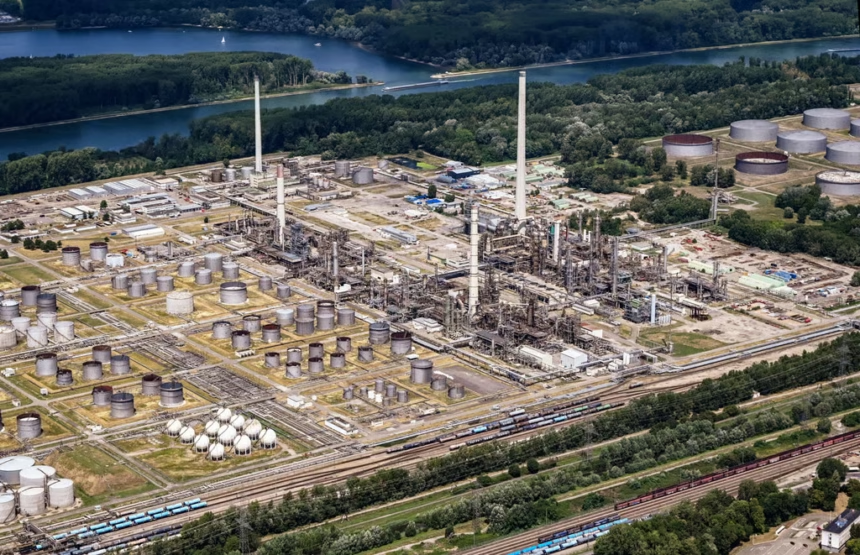
One of the hardest-hit facilities was the Miro refinery near Karlsruhe — Germany’s largest refinery — which confirmed that it received no crude oil through the TAL pipeline for three days.
During the disruption, the refinery relied on existing reserves to maintain operations.
A spokesperson for the refinery stated that fuel supplies to petrol stations remained stable and uninterrupted throughout the incident.
The Bayernoil refinery in Bavaria was also affected, with its sites in Neustadt and Vohburg similarly relying on stored reserves during the outage.
Cause under investigation
According to the report, the disruption was triggered by an attack on the power supply of a pumping station near Terzo di Tolmezzo in northern Italy.
Authorities are investigating the incident as a suspected act of sabotage. German and Italian officials are reportedly cooperating on the case, while investigators are still determining whether the attack was politically motivated.
The German Interior Ministry confirmed that the Federal Criminal Police Office is in contact with Italian authorities regarding the incident.
Critical infrastructure concerns
Officials warned that the case highlights vulnerabilities in Europe’s energy infrastructure, particularly in the context of geopolitical tensions and rising risks to critical supply routes.
The TAL pipeline is a key route transporting crude oil from the Adriatic coast to refineries in Germany and Austria, making it strategically important for fuel supply security in the region.
Authorities noted that while no fuel shortages occurred, the incident exposed how quickly supply stability could be affected by disruptions to infrastructure.
Broader energy context
Germany continues to rely heavily on imported fuels, including around 36% of its diesel supply. Officials also warned that global market pressures and geopolitical instability could increase the risk of future supply bottlenecks, particularly in aviation and transport fuels.