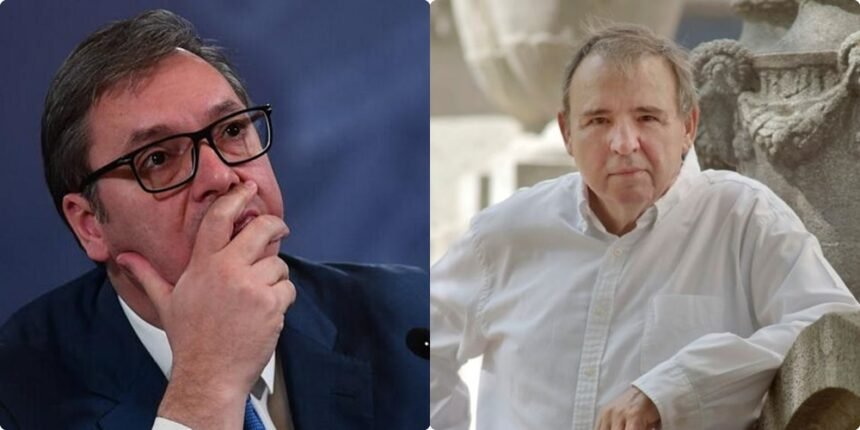
Serbian filmmaker, writer, and professor Goran Marković has sharply criticized the current political and social climate in Serbia, describing it as a serious threat to artistic freedom, pluralism, and critical thought.
In an interview with Nova, Marković said he feels “as if in exile,” using strong imagery to describe life under what he called an increasingly restrictive environment.
“Like Living in a Totalitarian System”
“When I look out the window, I only see a Siberian tundra. These are totalitarian regimes that destroy everything related to freedom and artistic expression,” Marković stated.
He argued that authoritarian systems historically fear culture and the arts because they challenge power structures, adding that this pattern is well known across past regimes.
Marković also claimed that conditions in Serbia have worsened significantly since 2024, particularly affecting artists and intellectuals, and said that public discourse has become increasingly hostile.
Comparing Past and Present Political Eras
The director drew parallels between the current situation and the era of Slobodan Milošević, saying that labels such as “traitor” have long been used against critical voices.
He also referred to President Aleksandar Vučić, claiming that public dissatisfaction is growing and that citizens are increasingly aware of the political system.
“The system is no longer led by democratic institutions, but by structures tied to narrow interests,” he said.
“The End Is Near”
Marković stated that cultural institutions in Serbia are facing ongoing degradation and lack of support, arguing that recovery will only be possible after political change.
He concluded by predicting major political transformation: “The end of this situation will come only when this regime leaves power,” adding that the fall of the current government would be “the event of the century.”