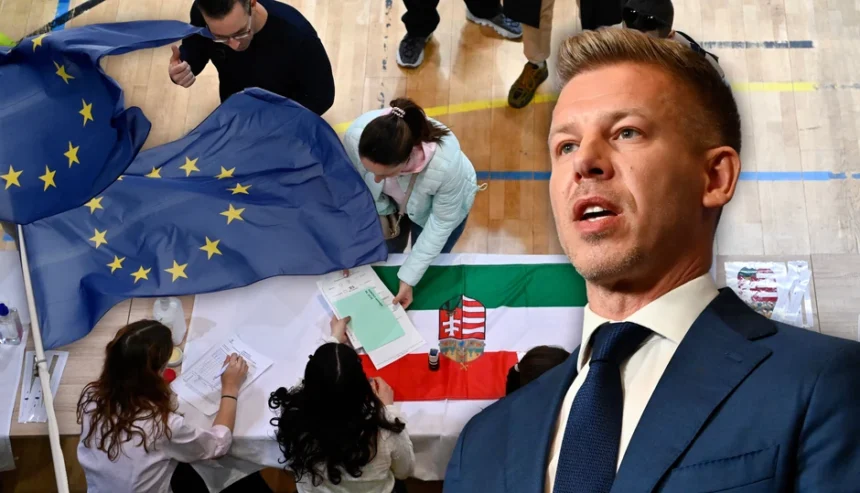
The parliamentary victory of Péter Magyar and his Tisza Party in Hungary has triggered what analysts describe as a major political shift in Europe, reshaping relations between Budapest, the European Union (EU), and Russia after 16 years of rule by Viktor Orbán.
The result marks the end of one of the longest uninterrupted governments in the EU and opens a new chapter for Hungary’s domestic and foreign policy direction.
A new course for Hungary
At home, Magyar’s incoming administration is expected to prioritize anti-corruption reforms, economic stabilization, and the unfreezing of billions of euros in EU funds previously blocked due to rule-of-law concerns.
His government is also expected to pursue closer alignment with EU institutions, including potential steps toward joining the European Public Prosecutor’s Office (EPPO), a move long resisted by Orbán’s administration.
However, analysts note that Magyar’s victory does not signal a full ideological break with Hungary’s past policies. His party continues to oppose key EU migration and asylum frameworks and has indicated a gradual rather than immediate shift in energy policy.
EU welcomes political shift, but challenges remain
European Union officials have broadly welcomed the election result, viewing it as an opportunity to ease long-standing institutional tensions with Budapest, particularly over vetoes that have repeatedly delayed decisions on sanctions and Ukraine-related assistance.
EU leaders also see the change as a potential boost to internal unity, especially within debates over enlargement, sanctions policy, and defense coordination.
Still, observers caution that Hungary under Magyar is unlikely to become a fully compliant partner, given its domestic political constraints and mixed ideological positioning.
Russia faces strategic setback
For Moscow, the outcome represents a significant geopolitical setback in Central Europe.
Under Orbán, Hungary was often viewed as one of the EU’s most Russia-friendly voices, frequently slowing or challenging sanctions and military aid packages to Ukraine.
With Magyar expected to take a more pro-EU stance, Russia is likely to lose a key ally inside EU decision-making structures, further isolating its position within European institutions.
Energy cooperation between Budapest and Moscow is expected to continue in the short term, but gradual diversification away from Russian oil and gas has been signaled as a long-term objective.
Ukraine support expected to continue
While Hungary is expected to unblock EU financial assistance to Ukraine, the new leadership has indicated it will not provide direct military aid or weapons deliveries.
This reflects a continued cautious approach despite the broader pro-European orientation of the incoming government.
A shifting European balance
The election is widely seen as part of a broader realignment in European politics, weakening nationalist coordination networks and strengthening centrist, EU-aligned leadership across several member states.
However, experts emphasize that the full impact of Magyar’s leadership will depend on how effectively he balances domestic political divisions with external expectations from Brussels.