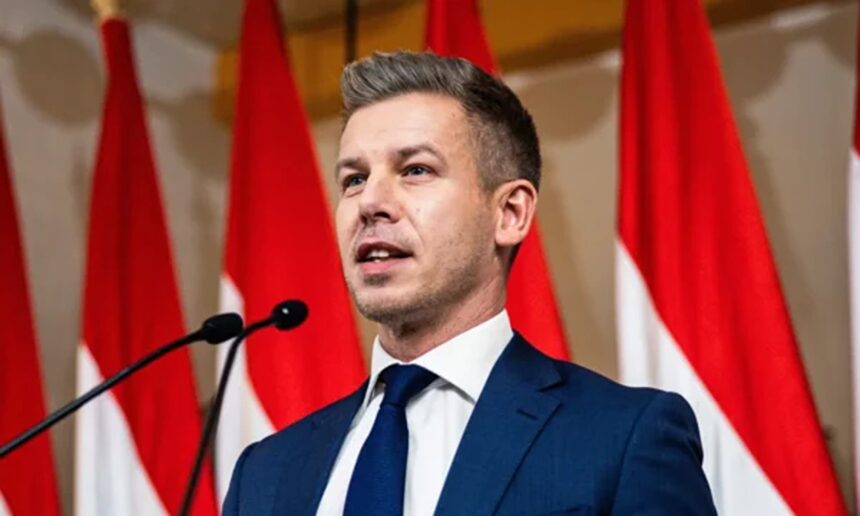
The victory of Péter Magyar marks a major political turning point in Hungary, ending the 16-year dominance of Viktor Orbán and triggering expectations of a new approach toward the European Union and foreign policy.
Shortly after the election results, Magyar said there is “no time to waste” in forming a new government, signaling urgency in addressing Hungary’s political and economic challenges. His win is being seen in Brussels as an opportunity to reset relations between Budapest and the EU after years of tension under Orbán’s rule.
The Orbán government had repeatedly clashed with the European Union over issues including Ukraine policy, sanctions on Russia, and rule-of-law concerns, which led to the freezing of around €18 billion in EU funds. EU officials now hope Hungary will return to a more cooperative stance, potentially unlocking stalled financial support and judicial reforms.
Magyar has promised to restore institutional balance and strengthen the judiciary, drawing comparisons with reforms undertaken in Poland after its political transition. However, analysts warn that despite the shift in leadership, Hungary’s foreign policy positions may not change radically overnight.
Key issues ahead include Hungary’s stance on EU aid packages for Ukraine, sanctions on Russia, and energy dependence linked to the Druzhba oil pipeline. While Magyar has signaled distancing from Moscow, he has also stressed pragmatic engagement, especially given Hungary’s geographic and energy realities.
In foreign policy remarks, Magyar has emphasized a balanced approach, stating that Hungary seeks dialogue with all neighbors while protecting national interests. On Ukraine, he acknowledged it as a victim of war but also reflected domestic skepticism toward deeper military or financial involvement.
EU leaders, including European Commission President Ursula von der Leyen, have welcomed the political transition, saying cooperation will begin immediately to “put Hungary back on the European path.”
Despite optimism in Brussels, uncertainty remains over how consistent Hungary’s future position will be, particularly on veto power, energy policy, and sanctions decisions—areas where Budapest has played a blocking role in the past.
The election is widely viewed as a significant realignment in Central European politics, potentially weakening Russian influence in the EU while opening a new phase of negotiations between Budapest and Brussels.