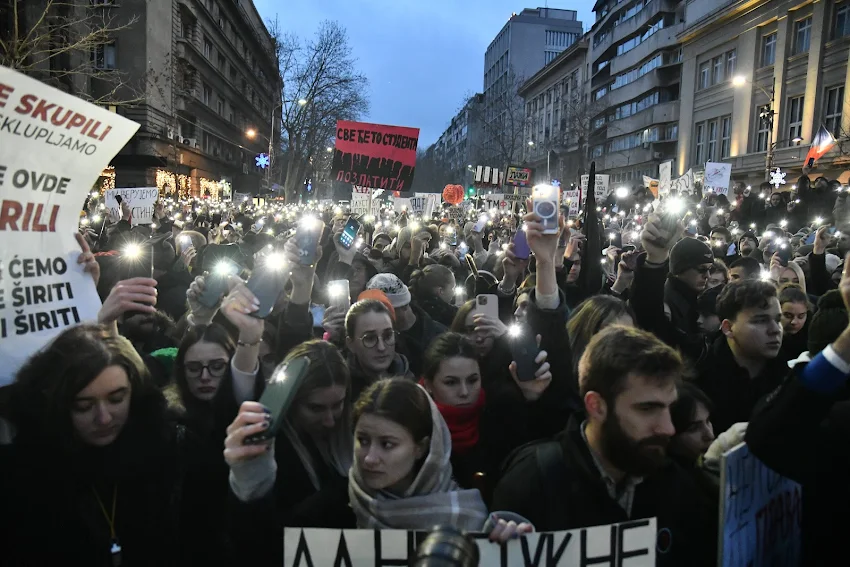
Students participating in blockades at the University of Belgrade Faculty of Law have filed a criminal complaint against two government officials, citing inflammatory public statements.
The complaint targets Boris Bratina and Darko Glišić, accusing them of inciting fear and legitimizing violence through remarks made in the media.
Allegations by students
According to law student Andrej Popović, the ministers’ statements suggested that police could use lethal force against students and included references implying that students might “return home in coffins.” He argued that such rhetoric disturbed the public, promoted violence, and attempted to justify unlawful conduct by authorities.
Legal representative Sara El Sarag stated that the case presents clear accountability, adding that such statements should not be made publicly, especially on national platforms. She also called for a swift judicial process.
Ministers’ responses
Minister Bratina previously said that students were “not aware that police have the right to beat and even kill them,” a remark that sparked strong backlash. He later claimed his words were taken out of context and stressed that he does not support violence.
The controversy prompted a response from Aleksandar Vučić, who described the statement as “inexcusable,” regardless of context, and issued an apology to students and citizens.
Minister Glišić also faced criticism after warning parents against enrolling their children in what he described as “blockaded faculties,” using rhetoric that referenced violence and death.
Broader context
The case reflects heightened tensions between student groups and authorities in Serbia, amid ongoing protests and political disputes. Observers note that the outcome could have implications for public discourse, accountability of officials, and the boundaries of political rhetoric
The legal action underscores growing concerns over the tone of political communication in Serbia, with students seeking accountability for statements they argue cross the line into incitement and public intimidation.