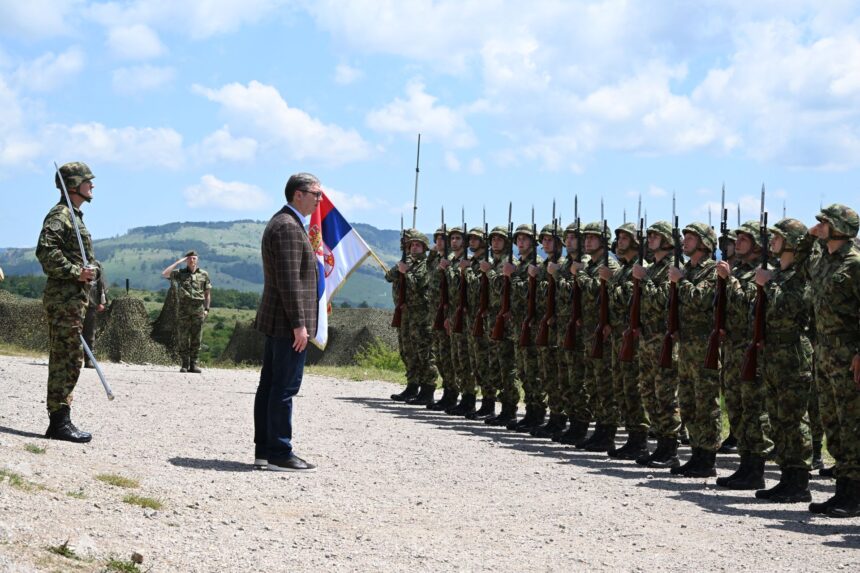
Aleksandar Vučić has said that the security situation in the region has become more complex, citing what he described as increased military cooperation between Albania, Croatia and Kosovo.
Following a meeting with Serbia’s defence leadership, Vučić stated that Belgrade remains committed to maintaining peace, but argued that this is only possible if the country continues to strengthen its military capabilities.
He announced that Serbia will sign new contracts in the coming days for the procurement of additional weapons systems and military equipment, describing an ongoing expansion of defence capacity.
According to Vučić, Serbia is significantly improving its stockpiles and operational readiness compared to earlier this year, while also increasing investments in drone production, robotics, and digitalisation of the armed forces.
He said the Serbian military will develop multi-layered air defence systems, including electronic warfare tools, protection for troops and critical infrastructure, and enhanced long-range capabilities.
Vučić also outlined plans to establish new military units equipped with robotic platforms and loitering munitions, as well as specialised reconnaissance units designed for targeting support and coordination with artillery and air force systems.
He added that Serbia is drawing lessons from past conflicts, including NATO’s 1999 intervention, and intends to modernise its armed forces through what he called a “robotisation strategy.”
In parallel, Vučić reiterated Serbia’s foreign policy balancing act, stating that the country will continue its path toward the European Union while maintaining cooperation with Russia, the United States, and China.
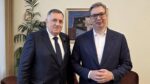
He also confirmed plans to invite the new leadership of Republika Srpska for an official visit in the coming days.
The remarks come amid ongoing regional tensions and renewed debate over military cooperation and security alignments in the Western Balkans.