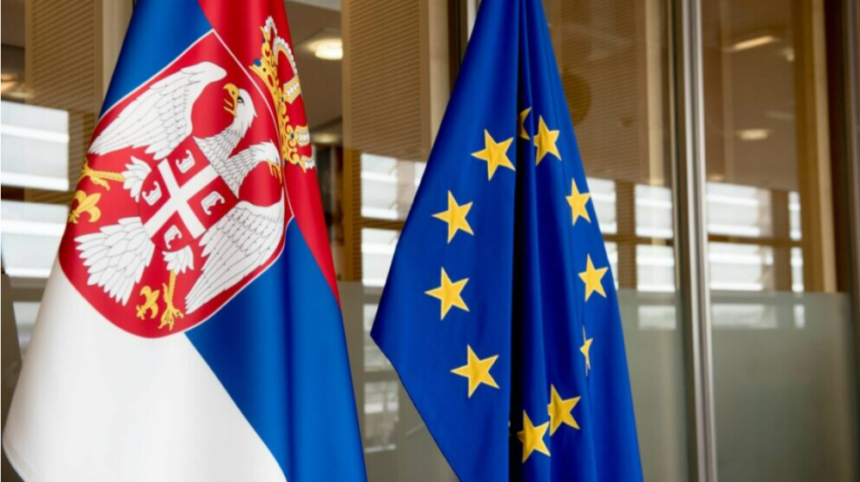
The European Union has issued one of its most severe warnings to Belgrade, signaling a potential suspension of funds from the Western Balkans Growth Plan. The warning, delivered by EU Enlargement Commissioner Marta Kos before the European Parliament’s Foreign Affairs Committee, cites significant backsliding in judicial independence and media freedom.
Sofija Popović of European Western Balkans told N1 that the message represents a critical juncture in Serbia’s accession process, particularly regarding the controversial “Mrdić Laws” and the government’s failure to reform media oversight.
The Trust Deficit: Judiciary and REM
Central to the friction between Brussels and Belgrade is the implementation of new judicial legislation. While the Serbian government claims these laws modernize the courts, EU officials express concern that they actually tighten political control over the judiciary.
Furthermore, a key pillar of the Reform Agenda—which serves as the prerequisite for financial disbursements—was the election of a new Regulatory Body for Electronic Media (REM) by the end of 2024. As of mid-2026, this requirement remains unfulfilled.
“The trust that Brussels had in the Serbian authorities… has vanished,” Popović noted. “They have realized that the government’s true intention is not to resolve media issues or ensure judicial independence, but quite the opposite.”
Who Will Feel the Impact First?
Speculation has mounted regarding how a funding freeze would affect the Serbian public. Analysts break down the impact into two primary phases:
- State Institutions: Roughly half of the Growth Plan funds are intended for direct budget support. This money is earmarked for strengthening institutional capacities to implement EU-required reforms. If frozen, the state apparatus will be the first to experience the shortfall.
- Infrastructure and SMEs: The remaining funds are designated for large-scale infrastructure projects and subsidies for small and medium-sized enterprises (SMEs). While officials argue that the EU is “punishing citizens,” experts clarify that the state will suffer the immediate budgetary hit before the lack of investment trickles down to the general population.
A Changing Geopolitical Landscape
The diplomatic atmosphere in Brussels has shifted following recent elections in Hungary. With the political change in Budapest, the Serbian government has lost a key ally within the EU that frequently advocated for a “softer approach” and the rewarding of Belgrade despite reform delays.
In a notable move, Commissioner Marta Kos met today with the Rector of the University of Belgrade, Vladan Đokić. Observers view this as a strategic shift by Brussels to engage with a broader spectrum of Serbian society, including the academic community, rather than relying solely on dialogue with government officials.
While the European Commission has not yet made a formal decision to freeze the funds, the message remains clear: without tangible evidence of judicial independence and media reform, the billions promised in the Growth Plan remain out of reach.