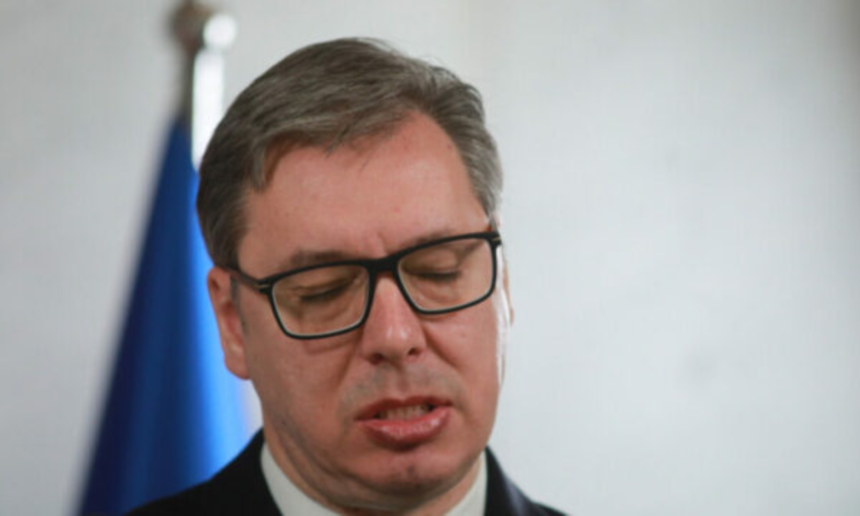
International media are increasingly focusing on the political situation in Serbia, noting that President Aleksandar Vučić is showing signs of nervousness following recent developments in Hungary and the reported political setback of Viktor Orbán.
According to the German outlet Table.Briefings, the Serbian opposition is seeking greater support from Berlin and Brussels, while warning of a “Hungarian scenario” that could also unfold in Serbia. The article, cited by Deutsche Welle, highlights that Vučić may be concerned about the weakening of a key regional ally.
Opposition politician Aleksandar Kavčić stated that the European Union is not offering the Serbian opposition the same level of support it provided to opposition forces in Hungary. He added that within Germany there is hesitation, driven by economic interests and fears of instability in the event of Vučić’s fall.
However, according to German media, corruption and pressure on the opposition are precisely the factors fueling uncertainty in the country.
The analysis further notes that some politicians within Germany’s CDU/CSU maintain close ties with Vučić, while divisions persist within the European People’s Party over whether his party should be expelled. Some EU countries are calling for tougher measures, while others prefer continued dialogue.
At the same time, critical voices are growing louder. Dutch MEP Thijs Reuten assessed that Vučić appears “nervous” following developments in Hungary. Meanwhile, Enlargement Commissioner Marta Kos has warned of the possibility of freezing EU funds for Serbia if standards on rule of law and media freedom are not met.
Reports also suggest that the Serbian president may call early elections in an attempt to catch the opposition and student movements off guard.
Meanwhile, signals from the ground are not in his favor: recent polls show a noticeable decline in support for Vučić, increasing fears of a scenario similar to that seen in Hungary.