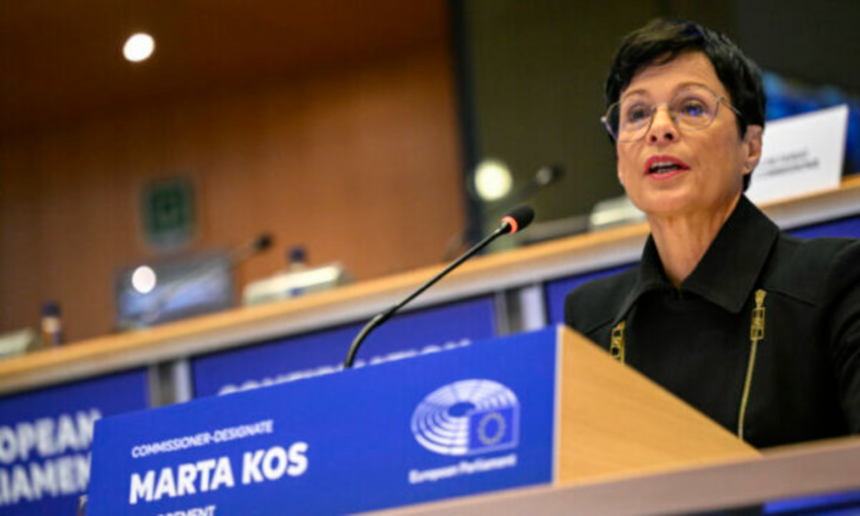
In a historic breakthrough for Western Balkan integration, the 27 European Union member states have officially reached an agreement to begin drafting the Accession Treaty for Montenegro. The announcement was made by the EU Commissioner for Enlargement, Marta Kos, signaling that Montenegro has entered the final legal phase of becoming the Union’s next member state.
A Concrete Path to Membership
The decision marks a pivot from years of negotiation to the formalization of membership terms. Commissioner Kos emphasized that Montenegro’s integration is no longer a distant goal but a tangible reality currently taking shape.
“Montenegro’s place within the EU is now taking form,” Kos stated. “Today, Member States decided to start drafting the Accession Treaty of Montenegro to the EU.”
The drafting process involves outlining the specific transition periods, legal obligations, and the official timeline for Podgorica’s full integration into the European framework.
Lessons from the Past: New Safeguards
Commissioner Kos noted that Montenegro’s accession serves as a blueprint for future enlargement. The upcoming treaty is expected to include “new and stronger safeguards” to prevent any potential backsliding regarding:
- The Rule of Law
- Fundamental Democratic Values
- Judicial Independence
These mechanisms are designed to ensure that the progress made during the candidate phase remains permanent once the country joins the bloc, addressing concerns raised during previous enlargement cycles.
Regional Implications: The “Front Runner” Effect
Montenegro has long been considered the “front runner” in the Western Balkans, having opened all negotiation chapters years ago. Its success is viewed as a vital omen for its neighbors, particularly Albania.
As Montenegro enters the endgame of its accession journey, Albania is following a similar accelerated trajectory. The government in Tirana has set ambitious goals to:
- Close all negotiation chapter groups by the end of 2027.
- Achieve full EU membership by 2030.
The advancement of Montenegro is seen by analysts as proof that the EU’s “merit-based” approach is functioning, providing a renewed sense of momentum for the entire region amidst a shifting geopolitical landscape.