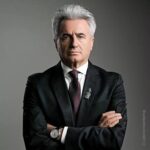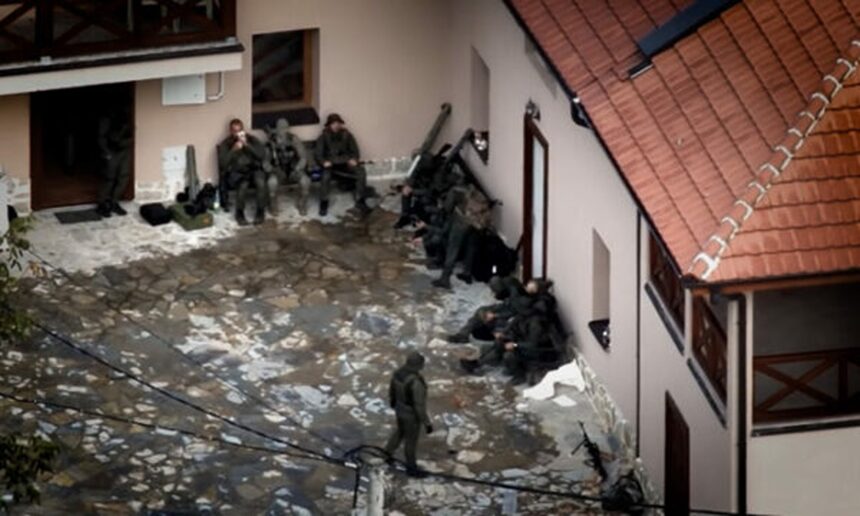
As the Basic Court in Prishtina prepares to deliver verdicts this Friday for three Serbs involved in the Banjska shootout, a glaring double standard remains: the man who confessed to orchestrating the entire operation, Milan Radoičić, continues to live in luxury and liberty under the direct protection of the Belgrade regime.
Two and a half years after the deadly skirmish that left a Kosovo Police officer and three local Serbs dead, the contrast between Kosovo’s judicial speed and Serbia’s institutional paralysis has never been more apparent.
A Sanctuary of Silence in Belgrade
While the Kosovo Special Prosecution has processed dozens of suspects, the Serbian judicial system—notoriously beholden to the executive branch—has effectively buried the case. Despite Radoičić’s public admission of guilt, the Higher Public Prosecutor’s Office in Belgrade has offered nothing but vague promises.
Critics argue that the “investigation” into Radoičić for arms smuggling is a legal farce designed to stall international pressure. By keeping Radoičić in a “legal limbo”—free but under a nominal reporting obligation—the Vučić regime ensures its “operational man on the ground” remains safe from extradition, while simultaneously preventing a trial that could expose the state’s logistical involvement in the attack.
The High Cost of Protection
The regime’s refusal to hold Radoičić accountable has come at a massive cost to Serbia’s international credibility.
- The Loss of the “Constructive” Label: Before Banjska, Vučić had successfully framed Belgrade as the stable partner in the region. That mask has slipped.
- EU Integration on Life Support: The “Banjska shadow” now looms over every EU report, serving as a permanent reminder of Serbia’s refusal to align with the rule of law.
The Expansion of Kosovo’s Sovereignty
The Banjska incident served as the ultimate catalyst for the Kosovo government. Prime Minister Albin Kurti has used the fallout to spread Kosovo’s sovereignty into the northern municipalities, effectively ending the era of Serbian-run administrative and security structures.
- Dismantling Parallel Institutions: Prishtina has moved aggressively to close down Serbian-funded offices and replace them with central government authority, fundamentally shifting the reality on the ground.
- The Erosion of Vučić’s Power: For years, the Vučić regime relied on these parallel structures to maintain a “frozen conflict” and exercise political leverage. Following the Banjska blunder, that leverage has been shattered. Vučić has not only lost his “operational man” on the ground to international infamy, but he has presided over the swiftest loss of Serbian institutional presence in Kosovo in decades.
Sacrificing the “Little Fish”
As the court in Prishtina prepares to sentence the three captured Serbs—Vladimir Tolić, Blagoje Spasojević, and Dušan Maksimović—the narrative in Belgrade remains one of deflection.
The three men facing the gavel on April 24 are essentially the “fall guys” of a failed geopolitical gamble. While they face decades in prison for terrorism and secessionism, the architect of their mission remains a frequent guest in the corridors of power in Belgrade.
Conclusion: A Regime Trap
The Banjska case is no longer just a criminal investigation; it is a testament to the captured nature of the Serbian state. The regime’s inability to prosecute Radoičić is not a matter of missing evidence—it is a matter of self-preservation. To put Radoičić on the stand would be to put the regime’s entire northern Kosovo policy on trial.
Until Belgrade moves beyond “declarative” cooperation, Banjska will remain the smoking gun that proves the Vučić administration prefers the company of paramilitaries over the path to European integration.