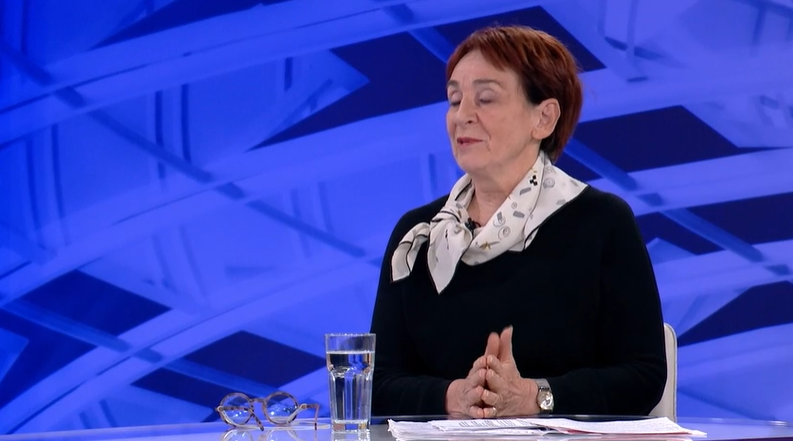
In a scathing critique of Serbia’s current legal climate, Vida Petrović Škero, the former President of the Supreme Court, has warned that the rule of law in Serbia is effectively in its final stages of disintegration. Speaking on the program “N1 Direktno” on April 23, 2026, Petrović Škero identified the notorious “Savamala” incident as the breaking point, stating that the state is now merely “crumbling the remains” of its judicial and constitutional order.
Her remarks follow a series of controversial legislative moves by the ruling Serbian Progressive Party (SNS) that have triggered a severe diplomatic rift with the European Union.
The “Blickkrieg” on the Judiciary: The Mrdić Laws
Central to the current crisis are the so-called “Mrdić Laws”—a package of judicial amendments proposed by SNS deputy Uglješa Mrdić and signed into law by President Aleksandar Vučić in late January 2026.
- The Substance: Critics, including the European Commission, argue these laws undermine prosecutorial independence by allowing the political reshuffling of prosecutors, particularly those involved in high-level corruption cases like the “Novi Sad Canopy” tragedy and the “General Staff” redevelopment scandal.
- The Fallout: The EU has recently moved to freeze €1.5 billion in funds from the “Growth Plan” for Serbia, citing the Mrdić Laws as a “serious step backward” for the rule of law.
- Petrović Škero’s Verdict: She described these laws as a simulation of the rule of law, designed specifically to bypass ministry oversight and public discussion.
“Each deputy involved in this is abusing their legal authority… This is a mockery and a simulation of what the rule of law represents,” she noted.
The Newest Threat: “Petrašinović’s Laws”
Petrović Škero also raised the alarm regarding the “Petrašinović Laws,” the latest set of electoral amendments proposed by MP Đorđe Petrašinović.
- Lack of Transparency: She criticized the “lightning-fast” introduction of these laws, noting that even members of the Judiciary Committee were only informed of the public discussions at the last minute.
- Electoral Manipulation: The key novelty in these proposals—allowing a single voter to support multiple electoral lists—is viewed by experts as a tactic to dilute the opposition and further destabilize the electoral system.
Key Legislative Flashpoints (April 2026)
| Law Category | Proposer | Impact on the State |
| Mrdić Laws | Uglješa Mrdić | Restructures prosecution; triggers EU funding freeze. |
| Petrašinović Laws | Đorđe Petrašinović | Changes electoral rules; allows multiple list support. |
| General Staff Law | Government | De-protects cultural monuments for luxury development. |
A Constitutional “Dead End”
The former Supreme Court head emphasized that the regime is increasingly using “authentic interpretations” of non-existent norms to bypass the Constitutional Court. She pointed out that while the Venice Commission is currently preparing an “urgent opinion” on the Mrdić Laws (expected in June), the Constitutional Court has notably failed to suspend their implementation in the interim.
“We are witnessing the destruction of the constitutional system,” Petrović Škero concluded. “When laws are made with public discussions that no one has seen or heard of, and when they are passed to bypass ministry experts, the rule of law isn’t just broken—it is being systematically erased.”