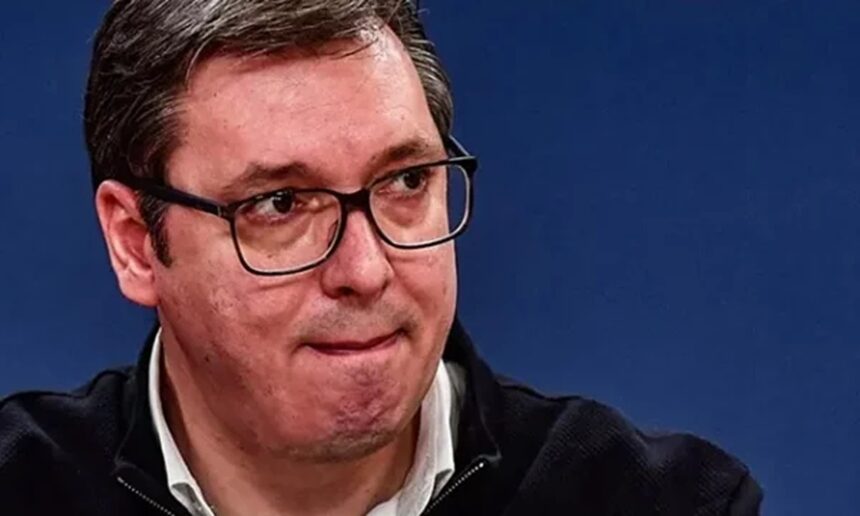
For over a decade, Serbian President Aleksandar Vučić has navigated a high-stakes diplomatic tightrope, pivoting between Brussels, Moscow, and Washington. However, by April 2026, the space for this maneuver has virtually vanished. Facing a financial ultimatum from the European Union, a tectonic political shift in Hungary, and unwavering pressure from the U.S. regarding Russian energy interests, the Vučić regime is confronting its most severe crisis of legitimacy to date.
The Billion-Euro Ultimatum from Brussels
The European Union has moved beyond rhetoric, issuing a direct threat to suspend Serbia’s access to the Western Balkans Growth Plan. At stake is approximately €1.5 billion—Serbia’s remaining share of a €6 billion fund designed to integrate the region.
The core of the dispute lies in Belgrade’s recent judicial reforms. Brussels has labeled these new laws as a direct assault on the independence of the judiciary, asserting that they strengthen the executive’s grip on prosecutors and judges. While the regime insists these changes improve efficiency, the EU has made the release of funds conditional on a positive review from the Venice Commission.
The Fall of Viktor Orbán: A Shield Removed
Perhaps the most significant blow to Vučić’s regional strategy is the recent electoral defeat of Viktor Orbán in Hungary. After 16 years of populist rule, the rise of Peter Magyar and his broad coalition has deprived Vučić of his most reliable ally within the EU.
For years, Orbán acted as a “diplomatic shield” for Belgrade, often vetoing or softening EU criticisms regarding Serbia’s democratic backsliding. With Orbán gone, the ideological “Budapest-Belgrade axis” has collapsed, leaving the Serbian regime isolated and without a protector at the EU Council table.
Energy and Sovereignty: The NIS Dilemma
The regime’s relationship with Washington and Moscow is currently being tested by the fate of Petrolej Industrija Srbije (NIS).
- The U.S. Pressure: Washington has maintained strict sanctions on NIS due to its 56% Russian ownership.
- The Hungarian Solution: Negotiations are underway for the Hungarian energy giant MOL to acquire the Russian stake.
- The Moscow Factor: While Belgrade seeks a “correct” exit for Russian interests to appease the U.S., the move risks alienating the Kremlin, which recently leveraged its gas supply to remind Vučić of Serbia’s energy dependency.
A State Captured: Freedom in Decline
The diplomatic squeeze coincides with a domestic reality that international observers find increasingly grim. According to the 2026 Freedom House report, Serbia has recorded one of the most significant declines in freedom globally.
Classified as “Partly Free,” the country is under fire for the systematic dismantling of media independence and the “capture” of state institutions by the ruling party. Critics, such as Eric Gordy of University College London, argue that the EU must now shift from economic dialogue to a firm defense of human rights and democratic values.
A Regime Trapped by its Own Design
The “balancing act” that once defined Vučić’s strength has become his greatest liability. Without Orbán to stall Brussels, and with Washington uninterested in “Vučić’s games,” the regime is being forced to choose. The era of receiving EU funds while maintaining Russian energy ties and suppressing domestic dissent appears to be at an end.
As Serbia’s democratic credentials hit an all-time low, the “smoking gun” of state capture is no longer hidden behind diplomatic ambiguity. The coming months will determine whether Belgrade finally aligns with European values or drifts into further international irrelevance.