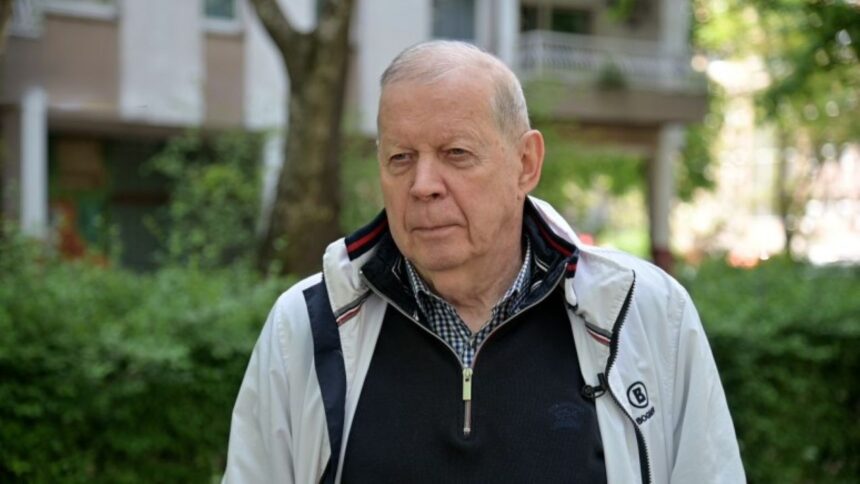
Former Serbian diplomat Zoran Milivojević has stated that the continuation of dialogue between Belgrade and Prishtina remains essential for Kosovo’s progress toward European Union integration, despite recent procedural developments.
Speaking to Kosovo Online, Milivojević said that conditions have been created for the continuation of Kosovo’s European path after the European Union lifted certain measures against Kosovo. However, he emphasized that any substantial progress depends on unblocking the dialogue with Serbia.
He noted that the signing of the Stabilisation and Association Agreement marked an important procedural step but pointed out that Kosovo still faces limitations due to the fact that several EU member states do not recognize its independence.
Milivojević also highlighted internal political challenges, including institutional deadlock and the potential for new elections, which could affect the functioning of Kosovo’s political system and delay further steps toward EU membership.
According to him, the dialogue between Belgrade and Prishtina remains stalled due to fundamentally opposing positions. Serbia insists that further progress is conditional on the implementation of the Brussels Agreement, particularly the establishment of the Association of Serb-majority municipalities, a point he claims Prishtina has been unwilling to fulfill.
He added that the EU has stressed the need to review the statute of this association through Kosovo’s Constitutional Court, describing it as a prerequisite for both Council of Europe membership and the resumption of dialogue.
Milivojević expressed skepticism about the prospects for renewed talks, citing a lack of political will. At the same time, he argued that geopolitical factors—particularly developments related to Ukraine and Moldova—are driving efforts within the EU to accelerate Kosovo’s integration process.
He also suggested that Kosovo’s leadership, including Prime Minister Albin Kurti and Foreign Minister Glauk Konjufca, is attempting to align closely with EU policies in order to advance its position internationally.
Finally, Milivojević pointed to what he described as limited support from the United States as an additional obstacle, concluding that without a breakthrough in the Belgrade–Prishtina dialogue, meaningful progress toward EU integration remains unlikely.