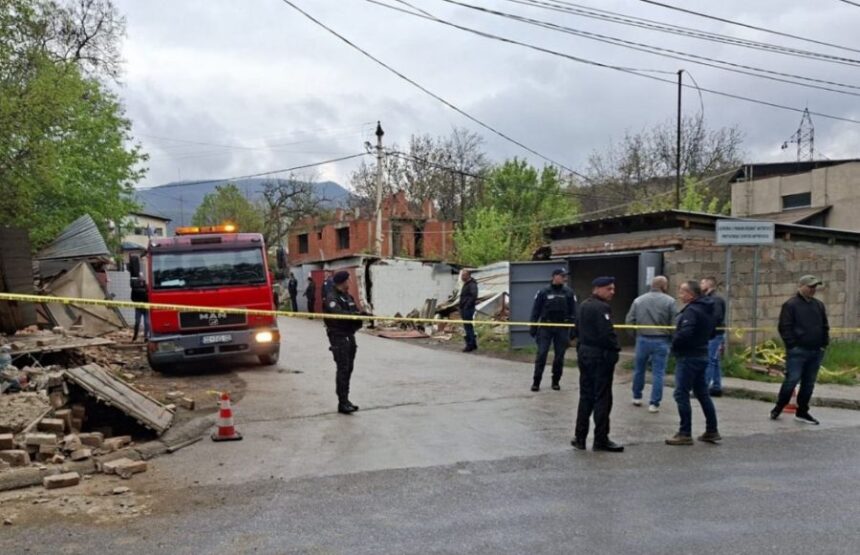
A property dispute in North Mitrovica has escalated into a legal and political issue following the demolition of structures on a contested parcel, drawing responses from local authorities and officials in Belgrade.
Early Thursday morning, Trepca A.D., through its Trepca Jug unit, cleared parcel 02537-1, removing 23 garages. The operation was carried out with security provided by the Kosovo Police.
The move was swiftly criticized by Serbia’s Office for Kosovo, which described the demolition as unlawful and framed it as a violation of the rights of the Serb community. However, local officials in North Mitrovica have approached the issue through legal channels, emphasizing procedural concerns.
Mayor Milan Radojević and Infrastructure Directorate official Ružica Božović argue that the demolition bypassed municipal competencies required under Kosovo’s planning and construction framework. They maintain that no municipal inspectorate order or final court decision authorized the action and have announced plans to pursue legal action against Trepca Jug and potentially the Kosovo Police.
On the other hand, Trepca A.D. asserts that it is the registered owner of the parcel and that the structures were built without legal basis. The company states that it issued formal notice in February 2026, followed by a 48-hour deadline for voluntary removal, which was not respected. According to the company, the clearance was conducted in line with its legal rights and with institutional backing.
Legal experts note that both claims present arguable positions and are likely to be tested in court. The municipality’s decision to pursue litigation and refer the matter to prosecutors reflects reliance on institutional mechanisms to resolve the dispute.
The case has also highlighted differing narratives. While Serbian authorities have framed the incident in broader political terms, local actors have focused on legal procedures and property rights, underscoring the distinction between political messaging and judicial processes.
As the dispute moves toward legal review, the outcome will depend on the courts’ assessment of property ownership, procedural compliance, and the actions taken by all parties involved.