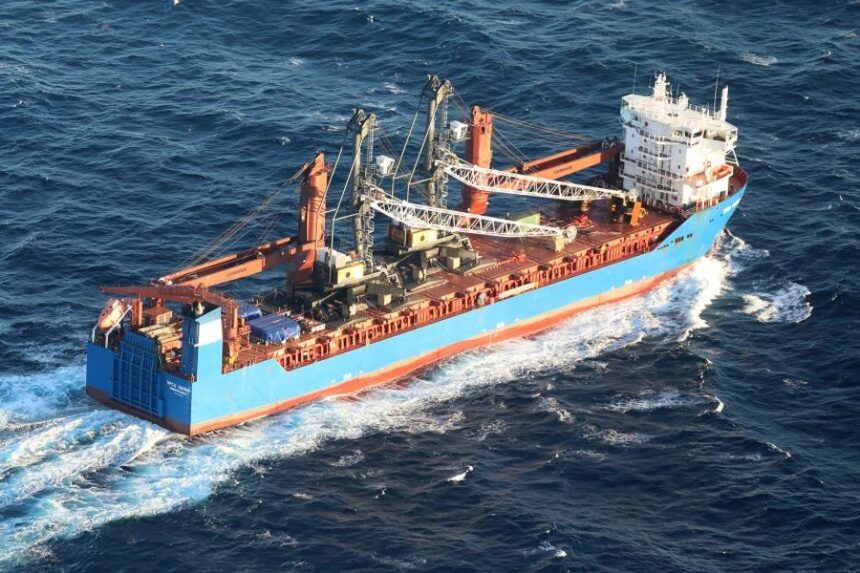
The Russian cargo vessel “Ursa Major,” suspected of transporting sensitive nuclear reactor components to North Korea, has sunk under mysterious circumstances in the Mediterranean Sea. The incident, characterized by powerful explosions and a potential covert military operation, has sparked an international investigation into the illegal transfer of nuclear technology.
The Incident and Casualties
According to a detailed investigation published by CNN, the vessel went down approximately 100 kilometers off the coast of Cartagena, Spain.
- The Sinking: The ship was reportedly rocked by a series of powerful explosions hitting its hull.
- Casualties: Two crew members lost their lives in the incident, while 14 others were rescued by Spanish maritime authorities.
- Previous Record: The “Ursa Major” (formerly known as the “Sparta 3”) is a vessel with a history of involvement in Russian military logistics, specifically during operations in Syria.
The Cargo: “Industrial Materials” or Nuclear Reactors?
Official cargo documents listed the shipment as “two large cranes” and general “industrial materials.” However, Spanish investigators and security experts suspect a far more sensitive payload.
- Technical Suspicions: Evidence suggests the presence of components for two nuclear reactors, similar to those used in Russian nuclear submarines.
- Destination: Captain Igor Anisimov reportedly testified to Spanish authorities that the cargo was likely destined for the North Korean port of Rason.
- The Route Puzzle: Investigators are questioning why such a high-stakes shipment would take a long maritime route through the Mediterranean instead of the more secure Russian rail network to Vladivostok.
Evidence of Covert Sabotage
The circumstances surrounding the sinking point toward deliberate intervention.
- Escort Behavior: The “Ursa Major” was being shadowed by Russian military vessels, including the “Ivan Gren.” Following the initial blasts, the “Ivan Gren” reportedly ordered other vessels to clear the area before four additional underwater explosions were recorded.
- Advanced Weaponry: Analysis of a 50-centimeter hole in the ship’s hull suggests the use of highly sophisticated weaponry possessed only by a few global powers (U.S., Russia, or NATO allies) or the placement of magnetic limpet mines.
- Radioactive Monitoring: Specialized U.S. aircraft capable of detecting radioactive materials have been spotted flying over the wreckage site twice since the sinking.
International Fallout
Moscow has officially labeled the sinking a “terrorist attack,” while the Spanish government has remained tight-lipped, releasing minimal official details. The presence of nuclear components on the Mediterranean seabed remains a significant environmental and security concern, as the mystery of who targeted the vessel—and exactly what lies in its hold—continues to deepen.