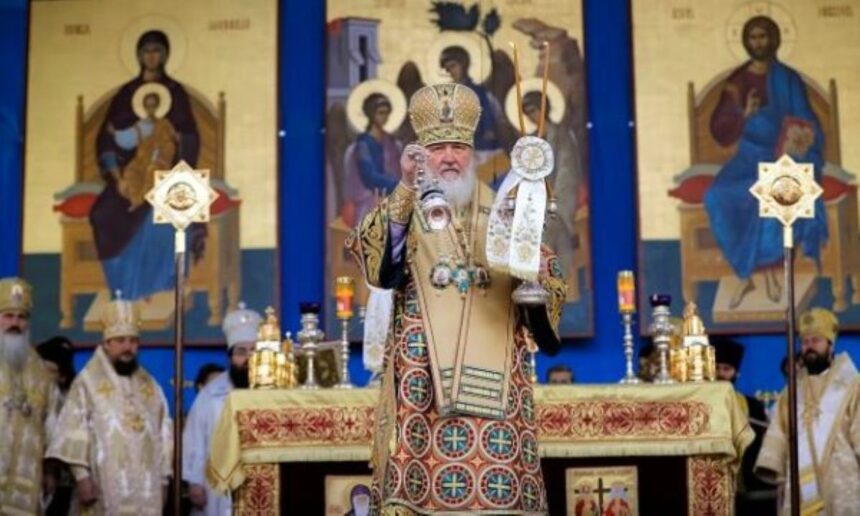
In a profound geopolitical departure from the obstructionist foreign policy of the previous administration, Hungary’s new government has signaled its willingness to allow the European Union to impose targeted sanctions on Patriarch Kirill, the head of the Russian Orthodox Church, alongside several high-profile Russian figures previously shielded by former Prime Minister Viktor Orbán.
The major policy shift, confirmed by senior European officials to Euronews, effectively eliminates a long-standing roadblock in Brussels. It clears the path for one of the Kremlin’s most powerful religious and political allies to be formally added to the EU’s asset-freeze and travel-ban blacklist under an upcoming “mini” sanctions package currently being drafted by EU ambassadors.
Dismantling the Orbán-Era “Red Lines”
The European Union first attempted to blacklist Patriarch Kirill in June 2022, citing his aggressive public sermons endorsing Vladimir Putin’s full-scale invasion of Ukraine, his framing of the war as a “metaphysical battle,” and his active role in spreading revisionist Kremlin propaganda.
However, the Orbán administration aggressively wielded its veto power to strike Kirill’s name from the final legal texts, claiming the blacklisting violated “sacrosanct religious freedoms.” Orbán repeated this intervention in late 2024 to systematically insulate Kirill and other Russian officials from European accountability.
Following the historic rise of Péter Magyar and his center-right government, Budapest is moving rapidly to repair its fractured relationship with Brussels and distance itself from Orbán’s infamous, transactional use of the national veto.
   [THE SHIFTING SANCTIONS MATRIX]
   • June 2022:  EU attempts to sanction Patriarch Kirill -> Vetoed by Viktor Orbán.
   • Dec 2024:   EU attempts secondary blacklisting -> Vetoed by Viktor Orbán.
   • May 2026:   Péter Magyar's government signals alignment -> Veto lifted; "Mini" package greenlit.
Pragmatic European Alignment vs. Private Deals
Márton Hajdu, a close political ally of Prime Minister Magyar and the newly appointed Chairman of the Hungarian Parliament’s Foreign Affairs Committee, outlined the strategic logic behind the administration’s new approach to Euronews.
“Sanctions that would directly harm or compromise the economic stability of Hungary remain absolutely unacceptable to us,” Hajdu stated. “However, in cases where the previous government explicitly weaponized the power of the Hungarian state to secure private backroom deals, I fully expect the new government not to block the joint, unified efforts of the European Union to amplify pressure on Russia to bring an end to this war.”
The Return of Cleansed Names to the Blacklist
With Hungary’s blanket protection lifted, EU diplomats confirmed that a broader review of individuals previously purged from earlier sanctions packages at Orbán’s absolute insistence is now actively underway. Among the key Russian figures slated to face renewed European restrictions are:
- Mikhail Degtyaryov: Russia’s current Minister of Sport, heavily involved in state-sponsored athletic propaganda.
- Viatcheslav Kantor: A prominent pro-Kremlin billionaire oligarch who had his previous EU asset seizures overturned due to Hungarian diplomatic interventions.
While a European diplomatic source reminded Euronews that “the technical review and renegotiation of names is not unusual” and remains subject to unanimous approval, Brussels is highly optimistic.
Unlike past negotiations, Slovak Prime Minister Robert Fico—who has frequently aligned with Budapest on regional funding disputes—was not in power during the initial 2022 Kirill disputes and has shown no appetite to expend political capital to protect the Russian Orthodox leadership, leaving the path forward for the mini-package highly viable.