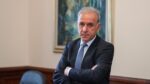
In an exclusive and sweeping interview with N1 Belgrade aired on Tuesday, May 26, 2026, Jennifer Brush, the former Chargé d’Affaires of the US Embassy in Belgrade, delivered a candid assessment of US-Serbian relations, localized corruption, and the crippling economic fallout of President Donald Trump’s unsanctioned war in Iran.
Speaking with journalist Dušan Mladenović, the veteran diplomat warned that Serbia’s chronic hesitation to strip Russian state interest from its oil monopoly, Naftna Industrija Srbije (NIS), has finally pushed the country into an economic corner.
The Void in US Diplomacy: A Region Without Ambassadors
Brush opened the interview by addressing a glaring anomaly in the current geopolitical landscape: the near-total absence of top-tier American diplomatic representation across Southeastern Europe and key global capitals.
- Regional Vacancies: Serbia has been without an appointed US Ambassador for over a year.
- The Global Trend: Brush pointed out that Croatia is currently the only country in the Western Balkans hosting an active American ambassador. Crucially, the diplomatic vacuum extends worldwide, leaving critical posts like Moscow and Kyiv without high-level presidential representatives.
- The Structural Lack: Brush labeled this vacancy rate a significant operational failure within contemporary US foreign policy, noting that Washington is severely limited by not having the president’s direct representatives on the ground during a period of global conflict.
The NIS Conundrum: “You Had 20 Years to Solve This”
Addressing the looming expiration of the US Office of Foreign Assets Control (OFAC) license—which has kept the Russian-majority-owned NIS operational despite severe international sanctions—Brush offered no sympathy for Belgrade’s panic.
       [NIS OWNERSHIP & SANCTIONS CRISIS]
                       │
                       ▼
 ┌────────────────────────────────────────────────────────┐
 │ 2008 TRADING BASELINE:                                 │
 │ Serbia sells 51% of NIS to Russia during Medvedev trip │
 ├────────────────────────────────────────────────────────┤
 │ THE 2026 DEADLINE:                                     │
 │ OFAC sanctions waiver expiring in weeks;               │
 │ Looming supply cutoff for Serbian domestic market      │
 ├────────────────────────────────────────────────────────┤
 │ EMERGENCY REMEDIES UNDER REVIEW:                       │
 │ • Domestic tycoons (Karić) scouting buyout             │
 │ • Renationalization (Irony of reversing privatization)  │
 └────────────────────────────────────────────────────────┘
Brush recalled serving in Belgrade during the 2008 state visit of Dmitry Medvedev, when Serbia originally agreed to sell a 51% controlling stake in NIS to Moscow at what she termed a “vehemently low, undervalued price.”
Jennifer Brush on Energy Procrastination: “Let’s be completely honest. You have had nearly twenty years to resolve this ownership structure, knowing it would eventually become a strategic liability. Washington’s position is crystalline: we want a buyer found for that 51% Russian stake. Renationalization is deeply ironic because the entire point of selling it twenty years ago was denationalization. Returning to square one is a terrible look for Serbia.”
Mafioso Violence and Corruption Chasing Away Wall Street
When asked why American foreign direct investment (FDI) has stagnated during the ruling Serbian Progressive Party (SNS) era compared to prior decades, Brush pointed directly to systemic corruption and a deteriorating domestic security apparatus.
She highlighted the high-profile targeted assassination that took place over the weekend inside Belgrade’s upscale Restaurant 27:
- Investor Anxiety: Brush stated that spectacular, daylight mafia-style hits signal extreme institutional weakness to international corporate boards looking to do business in the Balkans.
- The Rule of Law: Combined with recent scandals exposing state-linked extortion rings and fraudulent logistics firms exploiting US transport workers, Serbia is increasingly viewed as a high-risk environment.
- The Domestic Mirror: In a moment of candor, Brush admitted that the terminology of corruption has officially entered the domestic US lexicon under the current administration, making it harder for Washington to lecture foreign states. “It is difficult for us to say ‘stop being corrupt’ when we are tolerating more corruption within our own system than ever before.”
The War in Iran: Higher Aviation Fuel, Costly Fertilizer
Turning to global geopolitics, Brush lambasted Trump’s ongoing war against Iran, labeling it a constitutionally dubious campaign conducted without the mandatory authorization of the US Congress.
                    [IRANIAN WAR SPILLOVER]
                               │
       ├─► Strategic Loss ───► Termination of Obama-era JCPOA;
       │                       Zero IAEA inspection capabilities left
       │
       ├─► Transport Shock ──► Iran establishes toll/control over
       │                       the critical Strait of Hormuz
       │
       └─► Agrarian Crisis ──► Rocketing global fertilizer & fuel costs
                               hitting farmers from Ohio to the Balkans
Brush noted that by unilaterally abandoning the Obama-era Joint Comprehensive Plan of Action (JCPOA), Trump has left the West completely blind to Iran’s actual nuclear enrichment progress. Furthermore, the war has allowed Tehran to impose unprecedented maritime tolls and blockades across the strategic Strait of Hormuz.
The diplomat detailed the direct macroeconomic pipeline linking the war in Tehran to the everyday struggles of citizens in both Ohio and the Balkan peninsula:
- The Agriculture Shock: The conflict has caused an unprecedented spike in the cost of petroleum-based agricultural fertilizers. Brush noted that farmers in her home state of Ohio are facing insolvency, a crisis mirrored across the agricultural heartlands of Serbia.
- Aviation Degradation: Skyrocketing jet fuel prices have severely damaged commercial aviation. Brush recounted asking an airline official about scheduling during her trip to Belgrade, only to be told: “We have to choose between buying fuel and maintaining our aircraft.”
The Demise of American Media
In a closing exchange, Brush noted a structural convergence between the media landscapes of autocratic regimes and the United States.
While organizations like ODIHR and the OSCE have long criticized the SNS’s monopolistic control over Serbian broadcast frequencies, Brush expressed alarm over findings revealing that 95% of all American media outlets are now owned by just five conglomerates.
“The result is a catastrophic loss of institutional credibility that cannot be easily recovered,” Brush concluded, noting that US citizens are fleeing traditional networks in favor of decentralized platforms like Substack and independent podcasts to discover the truth. “When N1 is expressing sympathy to me over the democratic state of American media, it is clear the traditional roles have completely reversed.”