Kosovo’s Acting Minister for Communities and Returns, Nenad Rašić, has leveled explosive accusations against the political leadership in Belgrade, detailing an aggressive campaign of cross-border extortion, localized firings, and political terror targeting Kosovo Serbs who refuse to back the Belgrade-controlled Lista Serbe party in the upcoming June 7 parliamentary elections.
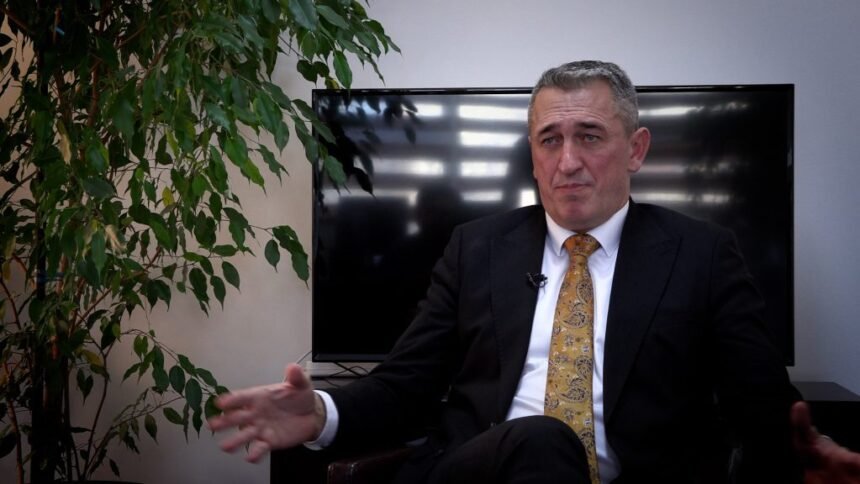
Speaking during an in-depth interview on the Përballje Podcast via Telegrafi.com on Tuesday, June 2, 2026, Rašić revealed that his party workers and ordinary ethnic Serb citizens are being subjected to systemic state-sponsored intimidation. Crucially, Rašić directed his sharpest frustration toward the Western diplomatic corps in Prishtina, accusing foreign embassies of total complacency and failing to defend European democratic values on the ground.
The Mechanism of Extortion: Job Defundings and Political Ostracization
Rašić—a veteran moderate politician who has consistently championed the integration of the Kosovo Serb community within Pristina’s institutional fabric—explained that Belgrade’s leverage operates through parallel financing.
[Belgrade's Political Extortion Pipeline]
   Serbian State Budget / Parallel Funds ──> Distributed to Kosovo Serbs
                                                     │
               +-------------------------------------+-------------------------------------+
               │                                                                           │
               ▼ (Refuses to vote Lista Serbe)                                             ▼ (Complies with Belgrade)
      [FINANCIAL REPRISAL]                                                        [RETAINED STATUS]
Immediate termination from parallel healthcare/school jobs                         Continued state payouts
   & placement on border alert tracking logs.                                    & local protection.
Kosovo Serb citizens who are formally employed in parallel state institutions funded directly by Serbia—specifically across local school systems, municipal administration registries, and regional healthcare clinics—are being explicitly threatened by regime enforcers. If they, or their direct family members, show public support for Rašić’s progressive political initiatives or refuse to promise their ballots to Lista Serbe, they are immediately slapped with summary job terminations and stripped of welfare benefits.
“I wrote a highly detailed, two-page intelligence memorandum to the entire diplomatic corps in Prishtina,” Rašić stated. “I outlined the raw reality on the ground—the targeted dismissals from work, the psychological repression of ordinary families, and the overt political coercion driving this campaign. I begged them to intervene because this level of autocracy is entirely unacceptable in the modern democratic world.”
The Diplomatic Silent Treatment: A Disappointing Echo Chamber
The primary catalyst for Rašić’s public disclosure, however, was not the predictable hostility from Belgrade, but the total breakdown of support from Kosovo’s international oversight allies. Despite sending multiple electronic dossiers containing documented instances of worker intimidation and formal civil rights violations, the response from Western embassies has been completely nonexistent.
The minister described the diplomatic response as a profound systemic failure:
- The Single Acknowledgment: Out of dozens of foreign diplomatic missions and high-profile international agencies contacted in Prishtina, only the Embassy of Montenegro issued a generic, automated email confirmation receipt.
- Complete Silence from the Quint: Not a single major Western power composing the Quint coalition (the United States, the United Kingdom, Germany, France, and Italy) or the European Union Office in Kosovo issued a formal response, a statement of concern, or a condemnation of the voter suppression.
Electoral Safeguards Under Severe Strain
Following the initial wall of silence, Rašić dispatched a second, urgent follow-up letter to all foreign chiefs of mission, pleading with international monitoring teams to fast-track observers to non-majority municipalities to halt the ongoing voter coercion before the June 7 vote. That letter similarly met a wall of absolute silence.
The total lack of an international response occurs as the European Parliament simultaneously debates a highly critical draft report characterizing Kosovo’s political landscape as fractured and volatile.
For moderate Kosovo Serb leaders attempting to offer an alternative path to the rigid directives of Serbian President Aleksandar Vučić, the silence from Western embassies signals a dangerous hands-off approach. Rašić concluded by warning that by treating the open manipulation of minority voters with complete indifference, Western diplomats are effectively greenlighting the subversion of free, fair, and competitive democratic standards inside Kosovo’s borders.