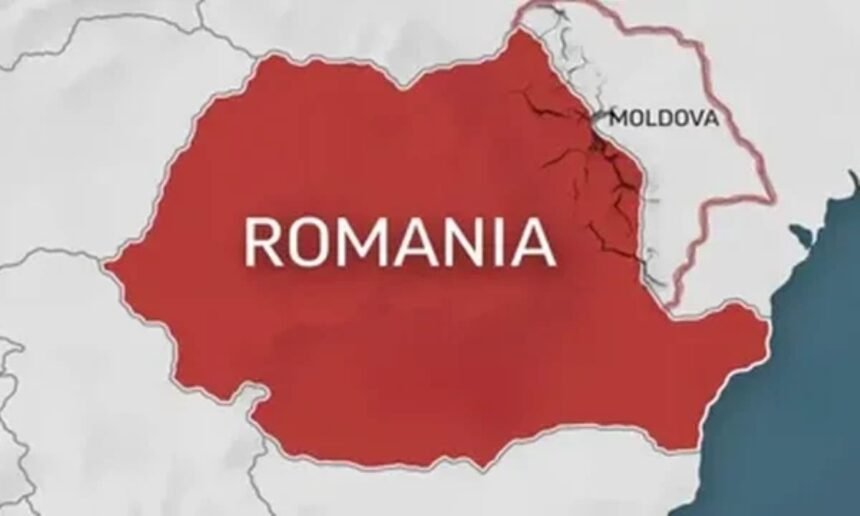
Moldova will seriously evaluate the option of reunifying with neighboring Romania if its path toward European Union membership is obstructed or permanently blocked, according to the country’s Deputy Prime Minister, Eugen Osmochescu.
Speaking in an interview with Euractiv, Moldova’s Deputy Prime Minister Eugen Osmochescu stated that the country would look at a historic reunification with Romania as a viable alternative should its EU accession process fail to show progress after 2028.
Osmochescu, who took office in November of last year, emphasized that Moldova’s primary objective remains the signing of an EU accession treaty by the end of 2028. Only if this timeline falls through will political leaders seriously consider alternative scenarios.
The remarks come at a critical time for Chisinau, as Moldova pushes to open its first “cluster” of EU membership negotiations while trying to align its legislation with EU standards and maintain geopolitical momentum under escalating Russian pressure.
Merit-Based Accession and the Need for a “Signal”
When asked whether Moldova risks having its EU integration derailed by being tethered to Ukraine’s accession path, Osmochescu insisted that enlargement must remain strictly merit-based. He urged Brussels to deliver tangible progress to help counter foreign interference.
“We need to send a strong signal to the population,” Osmochescu said, pointing to ongoing Russian hybrid operations specifically designed to erode public support for EU integration.
The vulnerabilities of the region were highlighted when a Russian strike on Ukraine’s Dniester hydroelectric power plant caused an oil spill that polluted the Dniester River—a vital water source for both Moldova and southwestern Ukraine.
Osmochescu candidly admitted that his country lacks the capacity to withstand prolonged military or hybrid duress on its own.
- Defensive Vulnerabilities: Moldova lacks a domestic military industry and weapons manufacturing.
- Scale: The country does not possess a standing military comparable to Ukraine’s.
- Resilience: “We are not as resilient as the Ukrainians,” Osmochescu acknowledged.
Alternative Integration Models
The European Commission expects the first fundamental cluster of negotiating chapters for both Ukraine and Moldova to open on June 16. “If we manage to open negotiations in June, that would be a clear, positive signal. That is what we are aiming for,” the Deputy Prime Minister added.
Osmochescu also expressed openness to temporary or alternative frameworks of gradual integration, such as the “associate member” status recently proposed by German Chancellor Friedrich Merz. Under the Merz blueprint, candidate countries could participate in EU leadership and ministerial councils, albeit without voting rights.
The Costs and Reality of Reunification
Addressing the cultural and identity implications of a potential union with Romania, Osmochescu argued that the groundwork is already laid. A vast majority of Moldovans share deep cultural, linguistic, and familial ties with Romania, and a significant portion of the population already holds dual citizenship.
Currently, support for reunification stands at roughly 40% within Moldova—where approximately 850,000 out of 2.4 million citizens hold Romanian passports—compared to around 70% approval within Romania itself.
“There is a cost,” Osmochescu admitted regarding a potential merger. “It would have to be borne by Romania and the EU. However, the economic cost would not be nearly as massive as the reunification of East and West Germany. It must be kept under consideration. That is precisely what the President has said as well.”