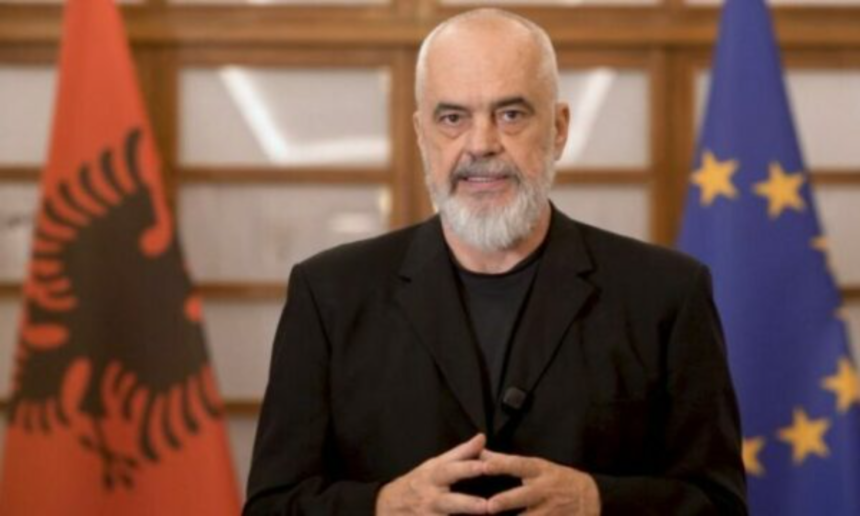
Under the banner of “Shared Prosperity and Stability,” Albanian Prime Minister Edi Rama joins continental leaders in Montenegro to fast-track regional economic integration and untangle the EU Growth Plan.
Albanian Prime Minister Edi Rama is officially scheduled to land in Montenegro tomorrow, June 5, 2026, to participate in the high-stakes EU-Western Balkans Summit in the coastal city of Tivat.
The high-level diplomatic forum gathers heads of state from across the European Union and their Western Balkan counterparts, serving as a critical platform to reaffirm strategic geopolitical partnerships and catalyze the region’s gridlocked European integration process.
The summit takes place exactly six months after the previous gathering in Brussels and will be structurally guided by the Strategic Agenda of the European Council 2024–2029. The proceedings will be co-chaired by European Council President Antonio Costa and the host nation’s executive lead, Montenegrin President Jakov Milatović.
Heavyweight Continental Presence
Despite localized diplomatic row over border security threatening to dominate the peripheral news cycle, Brussels is deploying its most powerful institutional figures to demonstrate its unyielding focus on the Western Balkan accession vector.
The core European delegation features:
- Ursula von der Leyen, President of the European Commission
- Antonio Costa, President of the European Council
- Kaja Kallas, High Representative of the EU for Foreign Affairs and Security Policy
The Agenda: Gradual Market Integration and the Growth Plan
Operating under the central thematic banner of “Shared Prosperity and Stability of the EU and the Western Balkans,” the plenary debates will bypass standard diplomatic platitudes to focus on actionable economic harmonization.
┌────────────────────────────────────────────────────────────────────────┐
│               Tivat Summit: Primary Programmatic Anchors               │
├────────────────────────────────────────────────────────────────────────┤
│ • Accession Velocity: Auditing the direct progress of the EU expansion │
│   framework for candidate nations.                                     │
│ • Gradual Integration: Mapping the phased, step-by-step entry of      │
│   Balkan economic sectors into the EU Single Market before full bloc   │
│   membership is granted.                                               │
│ • The Growth Plan Mandate: Operationalizing multi-billion-euro funding│
│   mechanisms tied directly to local domestic reforms.                  │
└────────────────────────────────────────────────────────────────────────┘
A focal point for Prime Minister Rama and his regional counterparts will be unlocking the next phases of the EU Growth Plan for the Western Balkans. The framework functions as a performance-based financial engine, releasing substantial European capital injections only after candidate states execute binding judicial, anti-corruption, and domestic market overhauls.
Summit Chronology and Logistics
The official itinerary released by summit coordinators indicates a tightly packed, highly synchronized diplomatic schedule:
The Summit Operational Flow:
- The State Welcome: A formal red-carpet arrival and welcoming ceremony hosted on the Adriatic coast by Montenegrin President Jakov Milatović.
- The Plenary Session: A comprehensive roundtable gathering where regional premiers and European chiefs will directly exchange views on synchronized security frameworks, pan-European energy corridors, and sustainable development pipelines.
- The Multilateral Sidelines: Closed-door bilateral tracks designed to smooth over escalating regional friction and establish robust defense synergy against asymmetric external threats.
By convening in Tivat, Western and Balkan leaders intend to deliver a definitive signal to global adversaries that the Euro-Atlantic integration of the Western Balkan six remains an absolute, non-negotiable foreign policy priority for Brussels.