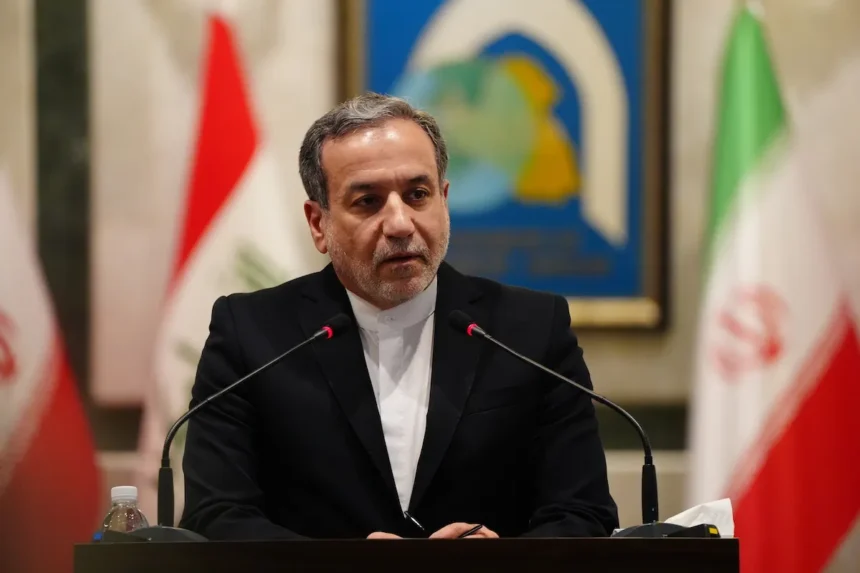
In a major development altering the timeline of Middle Eastern diplomacy, Iranian Foreign Minister Abbas Araghchi announced that the highly anticipated diplomatic memorandum of understanding with the United States has not yet been officially signed, warning that structural changes to the text remain highly possible.
Speaking directly on Iranian state television, the Islamic Republic’s top diplomat struck a fiercely defiant tone, claiming that Tehran enters these final diplomatic negotiations from a position of absolute geopolitical dominance.
1. The Status of the US-Iran Memorandum
Araghchi sought to damp down expectations of an immediate diplomatic breakthrough, signaling that Tehran is prepared to push for further concessions before any official signatures are put to paper.
The Fluid State of the US-Iran Diplomatic Text

 [ THE UNSIGNED STATUS ] ──► OPEN ALTERATIONS
 • The framework remains an unratified draft protocol, meaning all clauses,
   sanction-relief timelines, and compliance metrics are subject to rewrite.

 [ THE TRIUMPHANT NARRATIVE ] ──► "WINNERS OF THE WAR"
 • Araghchi explicitly declared that Iran views itself as the victor in the
   prolonged economic and regional proxy conflict against Western pressure.

 [ THE STRATEGIC DELAY ] ──► SEPARATING VECTOR FORCES
 • Tehran is deliberately decoupling immediate economic or security arrangements
   from long-term strategic assets to maximize negotiation leverage.
“The memorandum of understanding has still not been signed, and changes to the document are entirely possible. Iran considers itself the winner of the war.”
— Abbas Araghchi, Foreign Minister of Iran
2. Banning the Nuclear File: The Phased Negotiation Strategy
In a critical tactical revelation, Araghchi confirmed that Tehran has successfully sidelined Western attempts to tie immediate diplomatic breakthroughs to its contested atomic program.
The Phased Iranian Negotiation Grid
┌────────────────────────────────────────────────────────────────────────┐
│                                                                        │
│  [ STEP 1: ISOLATING IMMEDIATE PROTOCOLS ] ────────────────────────┐   │
│  • Locking down current economic guarantees, asset unfreezing, or     │   │
│    regional de-escalation parameters without nuclear oversight.        │   │
│                                                                        │   │
│  [ STEP 2: REJECTING PREMATURE OVERSIGHT ] ────────────────────────┤   │
│  • Pushing back against US and IAEA pressure to include uranium        │   │
│    enrichment caps within the current memorandum text.                │   │
│                                                                        │   │
│  [ STEP 3: THE LATER NUKES PHASE ] ────────────────────────────────┘   │
│  • Deferring all critical nuclear discussions to a completely separate, │
│    later diplomatic phase when Iran's enrichment leverage is higher.   │
│                                                                        │
└────────────────────────────────────────────────────────────────────────┘
3. Geopolitical Implications: Washington’s High-Stakes Calculus
By deferring the nuclear file, Araghchi’s announcement presents a severe diplomatic challenge to Washington, which has long maintained that nuclear non-proliferation must be the baseline of any structural framework with Tehran.
| Iranian Diplomatic Stance | US Negotiation Objective | Looming Strategic Risk |
| “Victory through Persistence.” Tehran aims to secure immediate economic relief while keeping its advanced nuclear infrastructure completely intact. | “Comprehensive Caps.” Washington wants immediate, verifiable restrictions on centrifuge deployment and enrichment levels. | The Leverage Trap. Allowing Tehran to split the negotiations could allow Iran to pocket economic wins while continuing its rapid march toward weapons-grade breakout capability. |
Araghchi’s high-stakes televised address signals that while both nations remain at the negotiating table, Iran is actively using the unsigned status of the memorandum to pressure Washington into a fragmented deal that leaves Tehran’s nuclear ambitions unchecked.