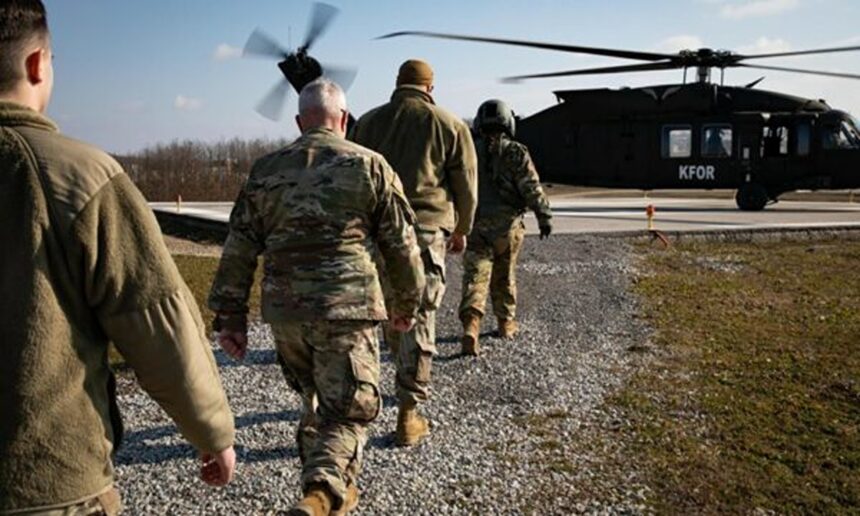
NATO has confirmed that it will gradually reduce the size of the KFOR mission in Kosovo, returning troop levels to those that existed before the security tensions of 2023.
Speaking in Brussels, NATO Secretary General Mark Rutte said the decision reflects an improved security environment in Kosovo and described it as a positive development.
“At this moment, KFOR has around 4,700 soldiers. What we will do is return to pre-2023 levels. Depending on circumstances, you will see a KFOR force of between 3,000 and 3,500 troops,” Rutte stated.
What Will Change?
Currently, KFOR consists of more than 4,650 troops from 31 countries. Under the new plan, troop numbers are expected to decrease by roughly 1,100–1,600 personnel, bringing the mission back to levels that existed before the unrest in northern Kosovo in 2023.
The reinforcement deployed after the tensions in northern Kosovo included nearly 1,000 additional NATO troops.
Why Is NATO Reducing Troops?
According to Rutte, NATO’s assessment is that Kosovo’s security situation remains generally stable.
He noted that NATO ended the deployment of reserve forces to KFOR in January 2026 after nearly two years of continuous rotations and has been reviewing the future structure of the mission.
Role of the United States
The move follows months of discussion about a possible reduction of American military deployments in Europe.
The United States currently contributes approximately 590 troops to KFOR, making it one of the largest contributors to the mission.
A representative of the United States European Command recently confirmed that Washington would adjust its contribution in line with recommendations from Supreme Headquarters Allied Powers Europe following NATO’s annual review.
The adjustment is expected to occur gradually and will be based on ongoing risk assessments.
What Does This Mean for Kosovo?
The reduction does not mean that NATO is ending its mission in Kosovo. KFOR will remain responsible for maintaining a safe and secure environment and ensuring freedom of movement throughout Kosovo.
KFOR remains the third security responder in Kosovo, after the Kosovo Police and European Union Rule of Law Mission in Kosovo.
Historical Context
KFOR entered Kosovo in June 1999 following the end of the Kosovo war. At the time, nearly 50,000 NATO troops were deployed across the territory.
The United States subsequently established Camp Bondsteel, which remains the largest American military base in the Balkans.
While troop numbers have steadily declined over the past two decades, NATO has repeatedly emphasized that it retains the capability to reinforce KFOR quickly if the security situation deteriorates.
Key Takeaway
The announced reduction signals NATO’s assessment that security conditions in Kosovo have improved compared to the period of heightened tensions in 2023. However, KFOR will remain in Kosovo with a substantial force of approximately 3,000–3,500 troops, and NATO continues to state that it remains fully committed to peace and stability in the country.