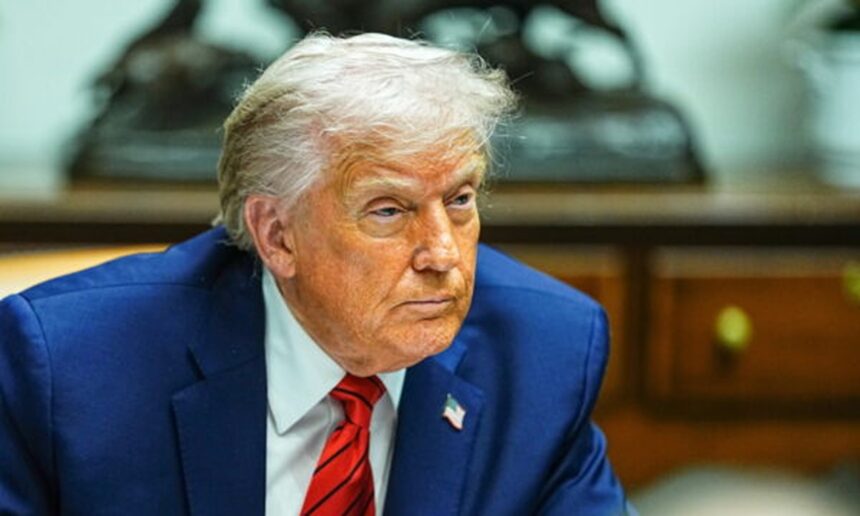
U.S. President Donald Trump has officially signed an executive directive extending the national emergency concerning the Western Balkans for another year. The formal document, published in the United States Federal Register, guarantees that Washington’s sweeping sanctions and oversight apparatus covering the region—including Kosovo—will remain firmly in place past the imminent June 26, 2026 deadline.
The extension underscores the White House’s continued focus on regional actors who threaten to unravel decades of hard-fought transatlantic stabilization and peace agreements.
The Legal Framework: Extending Executive Orders
The national emergency regarding the Western Balkans was originally declared in 2001 under Executive Order 13219. Over the last quarter-century, it has been systematically expanded by successive administrations to counter evolving geopolitical threats.
Trump’s latest signing relies directly on Section 202(d) of the National Emergencies Act, pushing the emergency framework through mid-2027.
The Western Balkans National Emergency Architecture:
========================================================================
EO 13219 (2001)  --> Original emergency declared to halt ethnic violence & block funds.
EO 13304 (2003)  --> Expanded to address steps obstructing the Dayton & Ohrid Accords.
EO 14033 (2021)  --> Broadened to explicitly target widespread systemic corruption.
EO 14140 (2025)  --> Signed by Trump to penalize Western Balkan sanctions-evasion networks.
Current Renewal  --> Signed June 2026; legally extends the emergency past June 26, 2026.
========================================================================
Core Threats Identified by the White House
The text of the declaration outlines a multi-layered security assessment. The White House explicitly warns that the situation on the ground continues to pose an “unusual and extraordinary threat to the national security and foreign policy of the United States.”
The decree identifies four primary areas of concern that trigger automatic U.S. freezing of assets and travel bans:
- Sovereignty Challenges: Ongoing, malicious attempts by local actors and foreign-backed entities to challenge the sovereignty and territorial integrity of nations across the Western Balkans.
- Undermining Accords: Active operations designed to subvert post-war institutions, boundary agreements, and peace frameworks.
- Systemic Corruption: Engagement in severe corruption that actively erodes the rule of law, suffocates economic growth, and bleeds public trust in democratic governance.
- Sanctions Evasion: Deliberate, structured networks operating within the region to evade existing U.S. government sanctions and financial blockades.
Curbing Extremist Violence and Obstruction
The Geopolitical Impact: The formal document warns that acts of extremist violence, obstructionist activities, and political polarization directly block the Western Balkans from achieving effective democratic governance and full integration into transatlantic institutions.
By sealing this renewal just days before it was set to expire, the Trump administration has signaled to regional leaders that despite shifting American defense priorities elsewhere, the U.S. Treasury and State Department retain full authority to financially isolate corrupt officials or secessionist movements seeking to destabilize the Balkans.