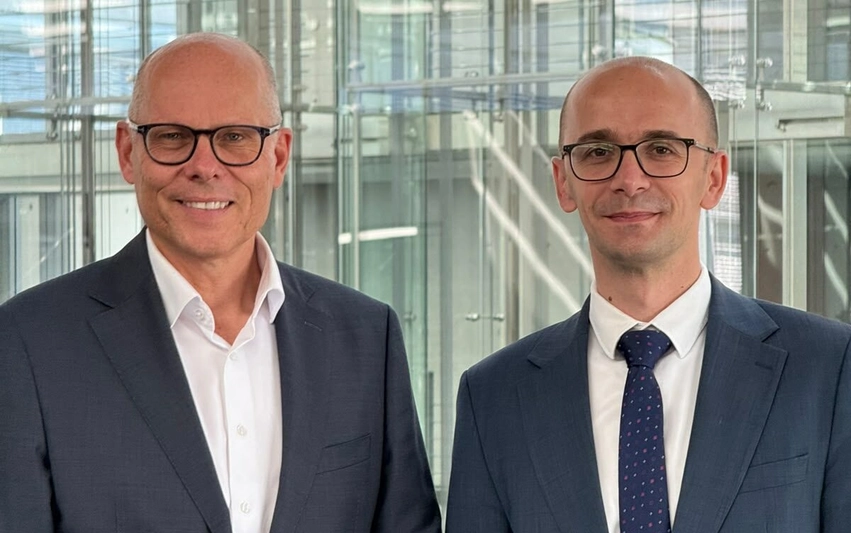
Kosovo’s Deputy Minister of Foreign Affairs and Diaspora, Kreshnik Ahmeti, conducted a series of high-level diplomatic meetings in Germany on Wednesday. He held talks with Christoph Israng, the Director-General for Europe at the German Federal Foreign Office, as well as Bundestag MPs Peter Beyer and Boris Mijatovic, both members of the Parliamentary Committee on Foreign Affairs.
The discussions focused primarily on bilateral relations, regional security threats, and accelerating Kosovo’s path toward Euro-Atlantic integration.
Key Diplomatic Engagements
According to an official press release from the Ministry of Foreign Affairs and Diaspora (MFAD), the meetings covered several critical strategic areas:
- Bilateral Consultations: In his meeting with Israng, Ahmeti focused on advancing Kosovo-Germany cooperation, with special emphasis on organizing the first formal political consultations between the two nations.
- Euro-Atlantic Support: In separate sessions with MPs Beyer and Mijatovic, Ahmeti expressed deep gratitude for Germany’s continuous backing and discussed EU enlargement, European security, and Kosovo’s ongoing bids for membership in international organizations.
Strategic Takeaways from the Aspen Institute Panel
Earlier in the day, Deputy Minister Ahmeti participated as a panelist at the “Western Balkans at a Crossroads: Geopolitics and Security” event, organized by the prestigious Aspen Institute in Berlin.
During the session, which evaluated the Berlin Process, EU expansion, and external threats, Ahmeti delivered a sharp critique of the current geopolitical status quo:
The External Threat: Ahmeti warned that geopolitical ambiguity from Western allies creates a dangerous vacuum, actively enabling Russian and Chinese influence to expand across the Balkans and, by extension, into mainland Europe.
Internal Destabilization: On a regional level, he stressed that stability is heavily threatened by revisionist approaches, challenges to state sovereignty, and a chronic lack of accountability for past acts of violence and aggression.
Minority Rights: Ahmeti firmly asserted that minority rights across the region must be strictly protected in accordance with unified European standards, rather than being weaponized for political leverage.
EU Integration as a Security Instrument
In his closing remarks on expansion, Ahmeti repositioned EU integration not just as a political milestone, but as a vital strategic instrument for peace and security. He voiced strong support for the gradual integration of the Western Balkans into EU mechanisms, provided it remains strictly tied to internal reforms and full alignment with the EU’s Common Foreign and Security Policy.