The Russian President acknowledges energy disruptions but maintains public confidence in a final military victory
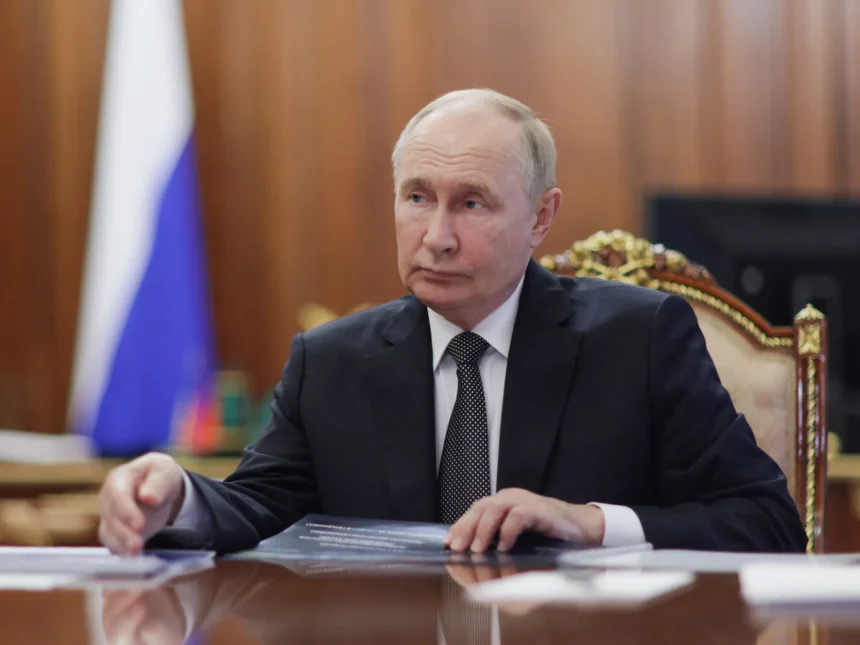
Russian President Vladimir Putin has conceded that Ukraine’s intensified long-range strike campaign is dealing a tangible blow to Russia’s critical infrastructure. In a rare public admission of vulnerability, Putin acknowledged that repeated drone strikes targeting domestic oil refineries and power grids have successfully triggered fuel shortages and localized energy crises.
Speaking in an interview with state television journalist Pavel Zarubin, Putin stated that the disruptions, while noticeable, are not yet fatal to the Kremlin’s strategic goals. “As for strikes against critical infrastructure in general, and energy infrastructure in particular… of course, these attacks on our infrastructure facilities create problems, that’s obvious,” Putin remarked. “Right now we’re observing a certain shortage, but it’s not critical.”
Severe Strain on the Energy Sector and Occupied Crimea
The admissions come amidst a coordinated Ukrainian drone campaign that has significantly degraded Russian oil refining capacity over the first half of 2026.
- Refinery Damage: Ukrainian long-range strikes have successfully targeted facilities deep within Russian territory—including recent hits in Krasnodar Krai and Yaroslavl Oblast—disrupting domestic fuel distribution.
- Fuel Rationing: Unprecedented petrol rationing has been implemented across multiple Russian provinces to offset a tightening domestic fuel market.
- Crimean Emergency: The situation is exceptionally acute in Russian-annexed Crimea, where authorities declared an “emergency situation” following severe supply-chain bottlenecks and halted fuel sales to civilians. Putin noted that shoring up air defense and securing immediate fuel logistics to the peninsula via land and sea remain top priorities.
Russian Domestic Impact Analysis (June 2026 Data)
========================================================================
Operational Threat --> Highly accurate Ukrainian long-range drone strikes.
Strategic Vulnerability -> Estimated 15% to 25% drop in domestic oil refining capacity.
Immediate Crisis     --> Emergency fuel rationing across dozens of Russian regions.
Kremlin Response     --> - Halting fuel exports (extending bans to diesel).
                         - Diverting scarce S-300/S-400 air defenses to the rear.
                         - Sourcing emergency fuel imports.
========================================================================
Defiance at the United Russia Party Congress
Hours prior to his televised interview, Putin addressed the annual congress of the ruling United Russia party, attempting to projection national resilience and shield the public from panic. He framed the Ukrainian strikes as “terrorist attacks on our territory” designed to sow self-doubt and fracture Russian social unity.
Vladimir Putin: “Yes, we see the problems, we are aware of them and are responding to them, but we will certainly ensure the security of both the country and our citizens. We will undoubtedly overcome all the challenges facing us today.”
Unyielding War Aims and Frontier Reality
Despite the shifting dynamics in the rear, Putin reaffirmed Russia’s maximalist objectives in the war, which has now persisted for over four years. He re-emphasized that Moscow remains fully committed to achieving total territorial control over the four partially occupied Ukrainian regions: Donetsk, Luhansk, Kherson, and Zaporizhzhia.
To justify his long-term optimism, Putin alleged that the Ukrainian Armed Forces are suffering from a “catastrophic shortage of personnel.” Independent military analysts note that the Kremlin is heavily constructing a narrative of inevitable victory to obscure the deep economic and logistical strains mounting within Russia’s borders. Meanwhile, Russian-installed officials in frontline sectors like Kherson and Zaporizhzhia continue to report rolling emergency blackouts as the targeted degradation of the regional power grid persists.