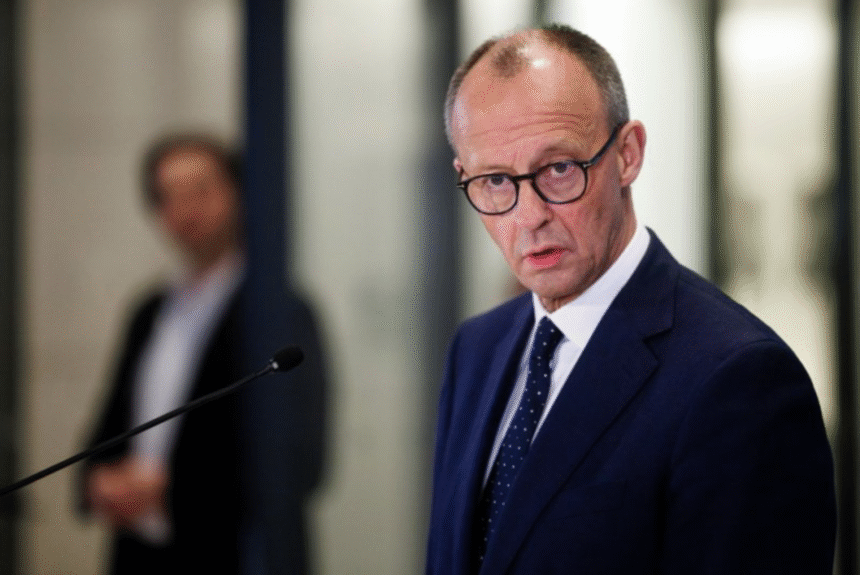
In a major strategic bid to accelerate European rearmament, German Defense Minister Boris Pistorius announced Wednesday that Germany intends to manufacture American weapons systems and specialized components locally under license. The announcement marks a pragmatic pivot for Berlin as it maneuvers to rapidly build up military capabilities while simultaneously managing Europe’s broader push for defense autonomy from Washington.
Speaking at a high-level joint press conference alongside Chancellor Friedrich Merz and NATO Secretary-General Mark Rutte, Pistorius addressed the apparent paradox of adopting American defense tech amid calls for European self-reliance.
“No one has said that aiming for more independence in the defense industry means being committed only to purely European systems,” Pistorius stated. “That is not the case, and it will not be the case in the future either.”
Addressing Capacity Deficits
The decision comes as Europe faces unprecedented industrial pressures to scale its conventional deterrence. Berlin is looking closely at partnerships connected to the F-35 fighter jet program and other critical systems.
- The Timeline: Germany expects severe procurement gaps over the next 10 to 15 years for capabilities it does not currently possess or cannot produce fast enough independently.
- The Reality: Pistorius acknowledged that domestic manufacturing capacities remain strictly limited, making trans-Atlantic defense-industrial cooperation a necessity rather than an alternative.
Rebalancing the Transatlantic Alliance
Chancellor Merz framed the decision as a calculated effort to fortify the alliance rather than fragment it. “We want to make NATO as a whole more European,” Merz emphasized, adding that reducing one-sided dependencies is the correct path for both sides of the Atlantic as European partners step up to shoulder conventional defense burdens.
NATO Chief Mark Rutte strongly endorsed Berlin’s trajectory, praising Germany as an “industrial powerhouse” and confirming that the country is on track to hit a monumental 3.5% of GDP spent on defense by 2029. Rutte issued a direct directive to the wider defense sector to expand supply chains, open new production facilities, and rapidly accelerate delivery timelines ahead of the upcoming NATO summit in Ankara.