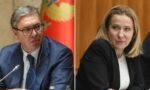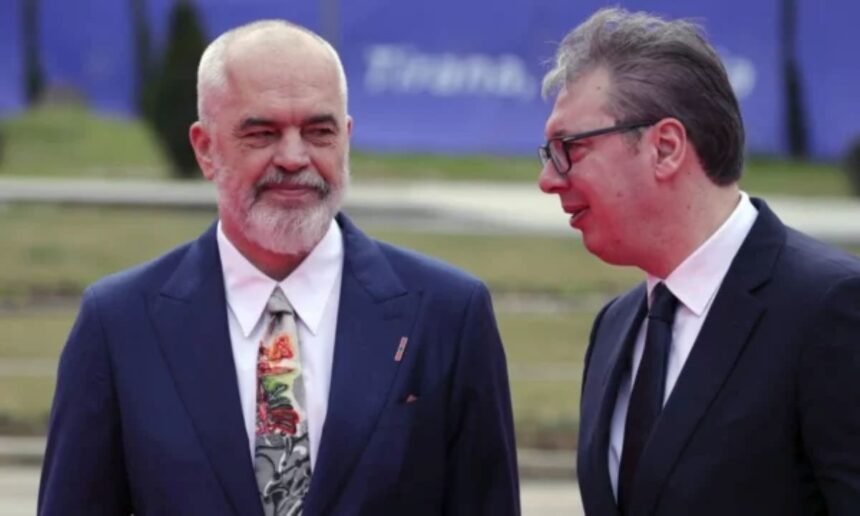
A diplomatic exchange between the Prime Minister of Albania, Edi Rama, and Serbian President Aleksandar Vučić has highlighted the deep ideological divide regarding the geopolitical status of Kosovo.
Speaking to Euronews Serbia, Edi Rama placed the blame for the deadlocked normalization dialogue squarely on Belgrade, asserting that Serbia must face the modern, irreversible reality on the ground.
The Core Confrontation: “There is only the Republic of Kosovo”
During his interview, Rama did not mince words, noting that Serbia’s refusal to recognize the post-independence landscape prevents any constructive forward movement.
“Serbia is most responsible for the situation we have in the dialogue, because it is not ready to accept reality, and reality has changed. There is no longer something called ‘Kosovo and Metohija’; there is the Republic of Kosovo.”
— Edi Rama, Prime Minister of Albania
Addressing the Non-Recognizing EU States
When questioned about the five EU member states that still do not recognize Kosovo’s sovereignty, Rama dismissed this as a minor exception rather than the rule. He pointed out that 5 out of 27 is a small minority, proving that the vast majority of Europe has accepted the facts. He drew a direct parallel to the collapse of Yugoslavia, stating that just as other nations found their path to independence, Albanians also exercised their legitimate right to self-determination.
Vučić’s Response: “The Reality is Not as Rosy”
Reacting to Rama’s blunt remarks, President Aleksandar Vučić acknowledged that the current status quo presents a difficult challenge for Serbia, but maintained a completely different interpretation of Kosovo’s future.
“I heard that Edi Rama said we must accept the reality, that there is no more Kosovo and Metohija. Reality is certainly not easy for our side, but I’m not sure it’s as rosy as Edi Rama thinks.”
— Aleksandar Vučić, President of Serbia
Vučić concluded by stating that despite differing viewpoints, he remains hopeful that the issue can be managed without escalation, aiming to resolve disputes “peacefully, through dialogue and compromise.”
Comparing the Two Positions
| Political Figure | Terminology Used | View on Dialogue Deadlock | Stance on Kosovo’s Status |
| Edi Rama (Albania) | “Republic of Kosovo” | Serbia’s stubborn refusal to accept the new regional reality. | Kosovo is an independent nation, equal to other post-Yugoslav states. |
| Aleksandar Vučić (Serbia) | “Southern Serbian Province” | Rejects Rama’s narrative; focuses on the difficulty of the status quo for Serbs. | Maintains that the territory remains a part of Serbia, rejecting outright sovereignty. |
Analyst Note: While Rama and Vučić have frequently portrayed themselves as partners in regional economic cooperation (such as the Open Balkan initiative), Kosovo remains the ultimate fault line where their political alignments remain entirely irreconcilable