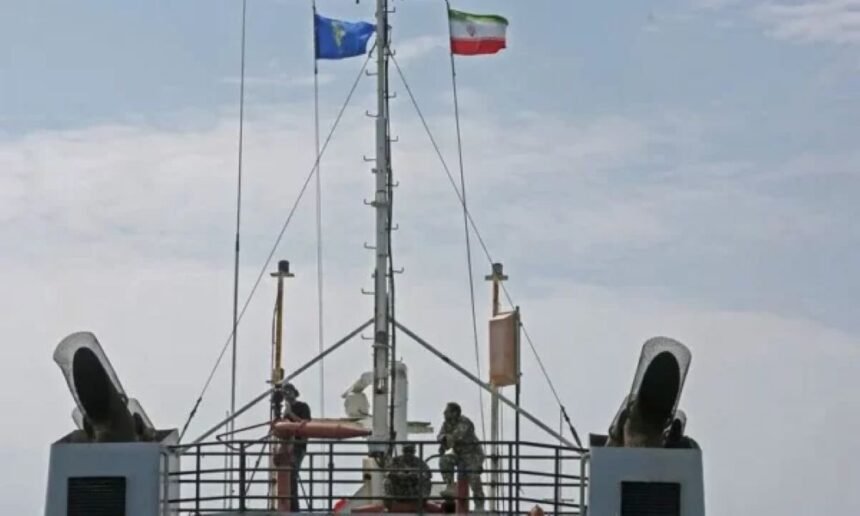
In a major escalation threatening global energy security, Iran has declared that the Strait of Hormuz will remain closed to international shipping.
Tehran insists the critical transit route will only reopen once the United States accepts its strict framework of demands—a move that has already triggered pre-emptive military strikes from American forces designed to degrade Iran’s blockade capabilities.
Tehran’s Demands: Full Control or Continued Blockade
Speaking on behalf of the Iranian military, spokesperson Mohammad Akrami-Nia stated that the maritime chokepoint will not reopen until Washington relinquishes operational oversight in the area:
“Control of the Strait must be placed entirely under Iranian authority before any shipping resumes.”
— Mohammad Akrami-Nia, Iranian Military Spokesperson
According to Iranian state media, Teheran’s conditions for lifting the blockade include:
- Framework Compliance: Washington must fully adhere to the terms of the framework peace agreement drafted last month.
- Cessation of Hostilities: An immediate end to what Tehran describes as “hostile operations” by U.S. and allied forces in the Persian Gulf.
- Jurisdictional Acceptance: International recognition of Iranian-imposed rules and regulations governing passage through the strait.
U.S. Response: Strikes Target Blockade Capabilities
The announcement from Tehran comes amidst a backdrop of fresh explosions reported across several Iranian cities.
U.S. Central Command (CENTCOM) confirmed it initiated targeted airstrikes within Iran. According to defense officials, these strikes did not target civilian infrastructure but were highly focused, precision operations aimed at:
- Anti-ship missile batteries positioned along the Iranian coastline.
- Radar installations and communication hubs used to track civilian merchant vessels.
- Fast-attack naval craft depots utilized by the Islamic Revolutionary Guard Corps (IRGC) to enforce the blockade.
Global Implications of the Chokepoint Closure
The Strait of Hormuz is the world’s most important energy chokepoint.
| Metric | Significance | Impact of Prolonged Closure |
| Daily Oil Flow | ~20-21 million barrels per day (~20% of global consumption) | Immediate surge in Brent Crude and WTI oil prices worldwide. |
| LNG Shipments | Carries almost all of Qatar’s liquefied natural gas (LNG) exports | Direct energy supply crises for European and Asian markets. |
| Alternative Routes | Very limited (Only partial bypass pipelines exist in Saudi Arabia/UAE) | Extreme logistical bottlenecks and skyrocketing maritime insurance rates. |
As both Washington and Tehran refuse to back down, regional allies are bracing for the wider economic and military fallout of a sustained maritime blockade.