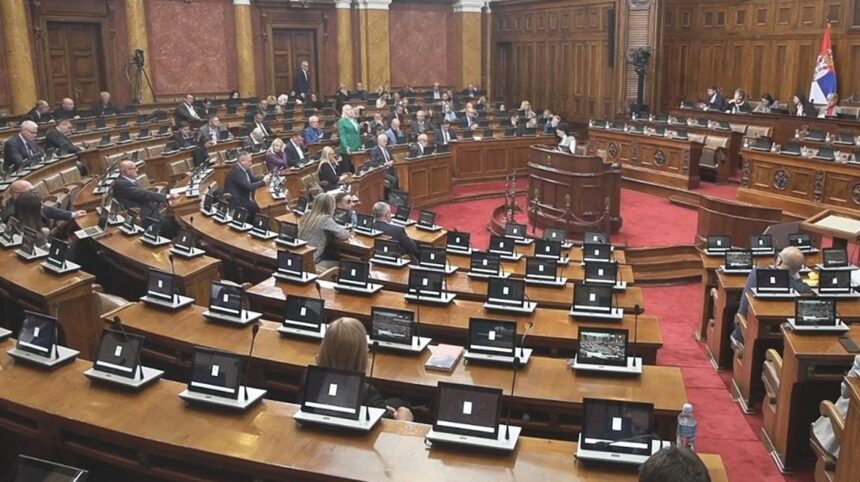
Serbia’s National Assembly is expected to hold a session on Monday to debate a motion of no confidence against the government, according to unofficial information reported by Savremena Politika.
If the parliamentary procedure on the no-confidence motion is completed, it would remove a key procedural obstacle to the possible calling of early parliamentary elections.
The motion was submitted in February by 62 opposition lawmakers, who sought a vote of no confidence over the so-called Generalštab affair. However, National Assembly Speaker Ana Brnabić scheduled the debate only on April 15, more than two months after the proposal was filed.
Until the parliamentary procedure on the motion is concluded, early parliamentary elections cannot formally be called unless the prime minister submits his resignation.
The development comes after President Aleksandar Vučić recently announced that the government led by Prime Minister Đuro Macut would resign.
Possible Scenarios After the Vote
If the National Assembly rejects the no-confidence motion, the government will remain in office and, from a legal standpoint, would be able to request the president to dissolve parliament and call early elections.
If lawmakers approve the motion, a 30-day constitutional deadline would begin for the formation of a new government. Should parliament fail to elect a new cabinet within that period, the National Assembly would be dissolved and early parliamentary elections would be called.
Under Serbian electoral law, the official election campaign for parliamentary elections must last no fewer than 45 days and no longer than 60 days.
The timing of Monday’s session has not yet been officially confirmed by Serbian parliamentary authorities.