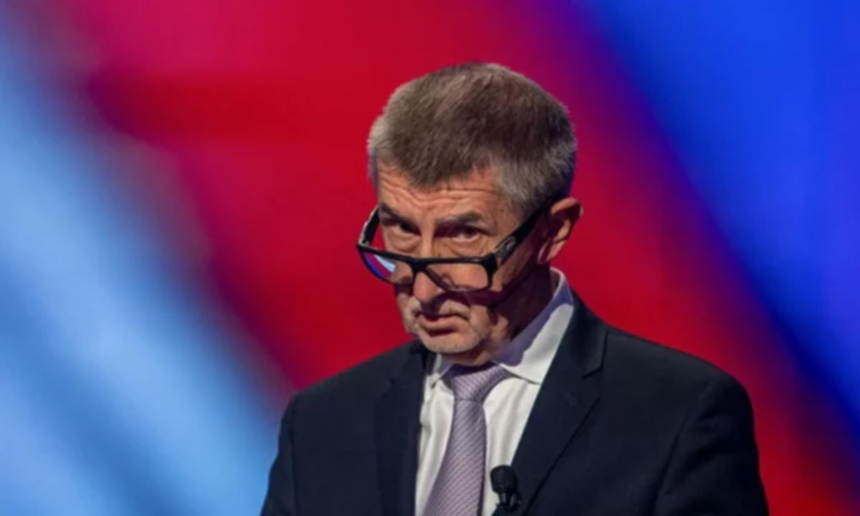
Czech Prime Minister Andrej Babiš has softened his rhetoric on the issue of Kosovo, appearing more cautious regarding Prague’s position on Kosovo’s independence.
Ahead of his official visit to Serbia, where he is leading an economic delegation of around 30 Czech companies, Babiš stated that the issue of Kosovo would not be a direct part of his mission in Belgrade.
“No, I don’t think we will resolve the issue of Kosovo,” Babiš said, adding that Serbia belongs in the European Union and that issues such as Kosovo, as well as relations between Serbia and Croatia, should be addressed at the highest level of the European Union.
Babiš stressed that his visit to Belgrade is primarily focused on economic cooperation, while also mentioning European integration and the fight against illegal migration as additional topics.
However, his stance on Kosovo has shown different nuances in the past.
In 2019, during a public debate in the Czech Republic over the possibility of reviewing the country’s recognition of Kosovo, Babiš stated that he could not make such a decision on his own and that the issue should be discussed at a foreign policy coordination meeting involving the president, ministers, and the speakers of both chambers of the Czech Parliament.
At the time, Babiš did not categorically rule out the possibility of changing the country’s position, although he emphasized that he saw no immediate reason for the Czech Republic to alter its policy toward Kosovo, which it had recognized in 2008.
The debate was also fueled by the position of then-President Miloš Zeman, who openly opposed Kosovo’s recognition and raised the idea of reviewing that decision.
Meanwhile, the Czech Ministry of Foreign Affairs stressed that the Czech Republic had recognized Kosovo as an independent state and had not withdrawn recognition from any country.
Today, Babiš’s statements appear to be more focused on the role of the European Union rather than on changing the Czech Republic’s own policy.
He has not announced the withdrawal of Kosovo’s recognition, but at the same time has avoided taking a direct position on the issue, describing it instead as a matter that should be resolved at the highest level of the European Union’s institutions.
Thus, Babiš’s statements over the years do not indicate any announcement of a change in the Czech Republic’s official position on Kosovo, but rather a more pragmatic and cautious approach, particularly in relation to Serbia, with which Prague seeks to deepen economic cooperation and political relations.