Claims recently published by Miloš Medenica, who in a video shared on Telegram mentioned the name of Boban Bačović as one of the alleged perpetrators of the murder of six Serbian youths at the “Panda” café in Peja on December 14, 1998, have once again brought attention to one of the darkest and still unresolved cases from the war in Kosovo.
Bačović, originally from Nikšić, Montenegro, has been mentioned in various media reports as a person with past links to Serbia’s State Security Service (RDB). In recent years, he has also been mentioned in connection with alleged ties to the “Škaljari” criminal group.
In the published video, Medenica claimed that Bačović was connected to the former Serbian security structures and that, during 1998, when the conflict in Kosovo was escalating, he was involved in an operation which, according to Medenica, was intended to create a justification for military and police intervention.
“Boban Bačević has been known since the 1990s as a person who worked for the former State Security Service (RDB). Specifically, in 1998, when the conflict in Kosovo escalated, the RDB allegedly planned to organize an attack against Serbian civilians in order to secure legitimacy for military intervention. According to this claim, this mission was entrusted to Boban Bačević, who, on December 14, 1998, together with another person, used automatic weapons to brutally kill six Serbian youths at the ‘Panda’ café, five of whom were minors and one an adult,” Medenica stated.
However, these allegations have not been verified by the competent authorities, and to date there is no indictment or court ruling linking Bačović to the killings at the “Panda” café. For this reason, the published claims should be treated as unverified and cannot be regarded as facts established by the judiciary.
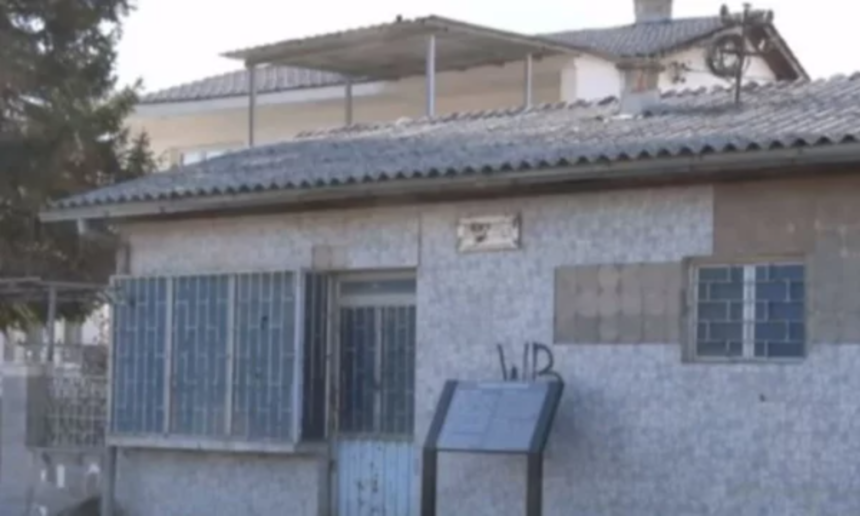
The attack at the “Panda” café took place on December 14, 1998, in Peja, when a group of armed individuals attacked the café, killing six Serbian youths and injuring 15 other people.
Immediately after the attack, the regime of Slobodan Milošević used the incident to attribute responsibility to Albanians and the Kosovo Liberation Army (KLA). At the time, the case was used as part of Belgrade’s narrative portraying Albanians as responsible for attacks against Serbian civilians and to justify further Serbian military and police operations in Kosovo.
However, over the years, that narrative increasingly came under question. In 2013, Aleksandar Vučić, then First Deputy Prime Minister of Serbia, publicly stated that there was no evidence that Albanians had carried out the attack at “Panda.” He also announced that the Serbian public would be “surprised” by the truth about the case.
Following those statements, Serbia’s Prosecutor’s Office for Organized Crime launched an investigation into the case. However, despite the passage of years, the investigation has not resulted in an indictment, and no one has been convicted of the murder of the six youths at the “Panda” café.
The lack of a judicial outcome has, for years, fueled suspicions that the attack may have been the result of an operation organized by certain Serbian state structures with the aim of influencing political and military developments during the war in Kosovo.
Various analyses, investigative reports, and media publications have also mentioned the names of several former senior Serbian security officials, including Jovica Stanišić, Franko Simatović, known as “Frenki,” Radomir Marković, and Milorad Ulemek, known as “Legija.”
However, these individuals have been mentioned only in the context of allegations, analyses, and speculation regarding a possible role of security structures in organizing or covering up the case. None of them has been charged or convicted in connection with the killings at the “Panda” café.
The “Panda” case continues to be regarded by some analysts and researchers as one of the most controversial examples of how, during the war in Kosovo, covert operations and security structures may have been used for political and propaganda purposes.
According to these analyses, an attack against Serbian civilians, presented as having been carried out by Albanians or the KLA, could have served to create the perception that the Serbian population in Kosovo was under threat and, in this way, generate support for the military and police operations of the then-regime in Belgrade.
Nevertheless, these assessments remain part of various analyses and interpretations and have not been confirmed through judicial proceedings or a final court ruling.
Over the years, various analysts have also drawn attention to other major political and security cases in the region in which parallel structures, security services, and criminal groups have allegedly intersected with political interests.
In this context, more recent cases have also been mentioned, such as the assassination of Kosovo Serb politician Oliver Ivanović and the armed attack in Banjska, Zvečan, where discussions have been raised regarding the role of parallel structures and armed groups in pursuing political objectives. However, each of these cases has its own circumstances and investigative and judicial processes, and any connection between them and the “Panda” case remains a matter of analysis rather than a legally established fact.
As long as there is no court ruling identifying the perpetrators and those responsible for the massacre at the “Panda” café, the case will continue to remain one of the open wounds of the Kosovo war.
The new allegations published by Miloš Medenica have once again highlighted the need for a full clarification of the incident, the identification of the perpetrators, and the determination of any institutional responsibility.
Nearly three decades after the murder of the six Serbian youths in Peja, the victims’ families have still not received a final answer from the justice system regarding who was behind this crime.
The absence of an indictment and a court ruling has ensured that the “Panda” case remains the subject of investigations, analyses, and various allegations, while those responsible for the crime have yet to be identified by the judiciary.