Representatives of the European Union met on Thursday with the mayors of the four Serb-majority municipalities in northern Kosovo amid growing tensions over recent judicial decisions, property demolitions near Ujman Lake and disputes over local governance.
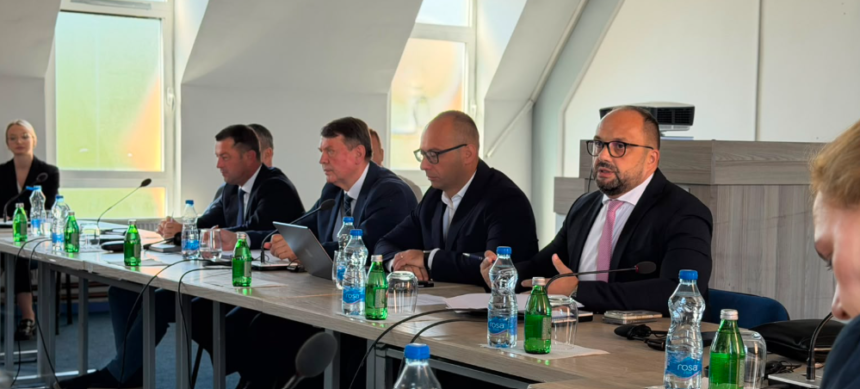
According to Srpska Lista, the meeting in Zveçan brought together the mayors of North Mitrovica, Zveçan, Leposaviq and Zubin Potok with Acting Head of the EU Office Eva Palatova, representatives of EULEX and ambassadors of several EU member states.
Although the European Union has yet to issue an official statement, the mayors said discussions focused on the relationship between Kosovo’s central institutions and local governments, municipal competencies and the protection of citizens’ rights.
The meeting came only days after the EU questioned the legality of decisions by Kosovo’s institutions that effectively blocked the return of former Serbian prosecutors to the justice system. Brussels said the decisions appeared incompatible with the principles of the rule of law and urged Kosovo’s authorities to avoid measures that would prevent the reintegration process.
The meeting also followed strong international reactions over the demolition of structures around Ujman Lake. The European Union, as well as the embassies of Germany and the United Kingdom, called on Kosovo authorities to suspend further demolitions until all legal procedures are exhausted, citing concerns over due process, property rights and effective legal remedies.
According to Srpska Lista, the mayors argued that recent actions by Kosovo’s central institutions have undermined local self-government by bypassing municipal authorities, restricting hiring, delaying infrastructure projects and limiting access to budget resources.
They also claimed that demolitions had taken place without final court decisions, arguing that such actions weaken legal certainty and the rule of law.
However, the latest criticism comes against the backdrop of a broader political campaign by Belgrade-backed Serbian representatives, who have increasingly invoked the rule of law following recent EU criticism of Kosovo’s actions. The same political structures have frequently rejected or ignored Kosovo’s legal framework and institutions when rulings or decisions did not align with their political interests, raising accusations of selectively using legal arguments and international criticism to advance political narratives.
Srpska Lista representatives told EU officials they remain committed to cooperation with international partners but insisted that Kosovo’s central institutions and the Kosovo Police must respect municipal competencies and allow local governments to function without interference.
The meeting took place as relations between Kosovo’s authorities and the Serbian community in the north remain strained over the justice system, property disputes around Ujman Lake and the future of Serbian-backed institutions operating in Kosovo.