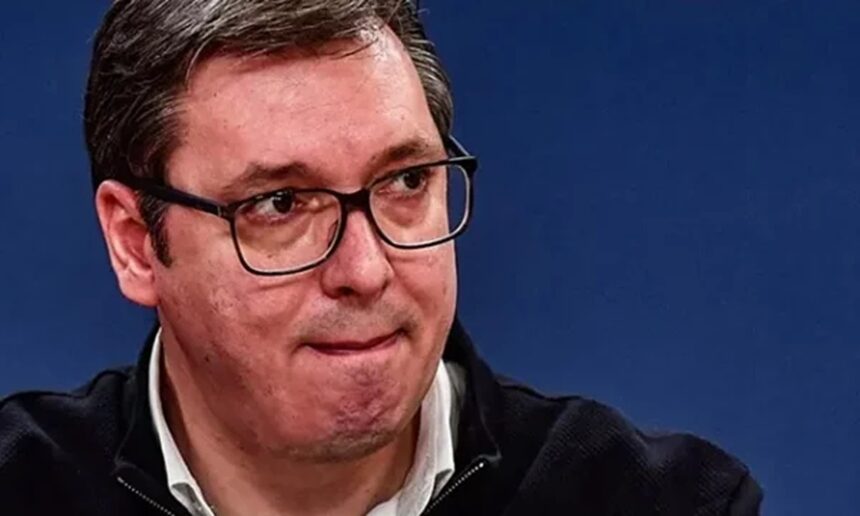
Recent statements by Serbian President Aleksandar Vučić and Serbian Minister Snežana Paunović have sparked renewed criticism in Kosovo, with political analysts and European political figures warning that such rhetoric undermines regional stability and the normalization process between Belgrade and Pristina.
Analysts argue that Vučić’s repeated assertion that “Kosovo is part of Serbia,” together with Paunović’s controversial remarks about the ethnic cleansing of Kosovo Albanians, should not be viewed as isolated incidents but as part of a broader and consistent political narrative toward Kosovo.
Political analyst Dorajet Imeri said the continued absence of a firm and coordinated response from the international community has allowed such rhetoric to become increasingly normalized.
According to Imeri, the lack of clear and decisive international condemnation has emboldened Serbian officials to continue making statements that challenge Kosovo’s sovereignty and fuel tensions in the region.
Arben Fetoshi, director of the Institute for Hybrid Warfare Studies, argued that the message delivered to Serbia through NATO’s 1999 intervention should now be reaffirmed politically.
He said the international community should send an unequivocal signal to Belgrade that rhetoric questioning Kosovo’s statehood and legitimizing past policies is incompatible with regional peace and European integration.
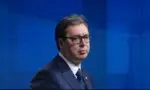
Speaking to newly commissioned cadets of the Serbian Armed Forces earlier this week, President Vučić reiterated that Kosovo is part of Serbia and told the cadets that they must defend it. He also criticized the recently signed trilateral military cooperation agreement between Kosovo, Albania, and Croatia, describing it as an alliance directed against Serbia.
Meanwhile, Serbian Minister Snežana Paunović stopped short of withdrawing her controversial remarks regarding Kosovo. While acknowledging that the phrase “ethnic cleansing” had been inappropriate, she insisted that she should have used the term “deportation” instead, without retracting the substance of her statement.
The latest rhetoric has also been condemned by the European Democrats, a member party of the European Democratic Party, which described the statements as harmful to reconciliation efforts and long-term stability in the Western Balkans.
In a public statement, the European Democrats linked Vučić’s comments with Paunović’s earlier declaration that she would have “ethnically cleansed” Kosovo in 1998, arguing that political leadership is measured not only by the positions leaders take but also by the rhetoric they tolerate and legitimize.
The group stressed that the Western Balkans’ European future must be built on dialogue, reconciliation, accountability, and respect for international law.