Serbia’s Socialist Party (SPS) is facing renewed scrutiny after senior officials embraced increasingly hardline nationalist rhetoric, a shift widely seen as an attempt to recover electoral support ahead of the next parliamentary elections.
The controversy intensified after State Administration and Local Self-Government Minister Snežana Paunović declared that, had she been in Slobodan Milošević’s position in 1998, she would have carried out the ethnic cleansing of Kosovo. Although Paunović later sought to soften her remarks by saying she should have used the term “deportation” instead, she did not retract the substance of her statement, drawing criticism from political observers and human rights advocates.
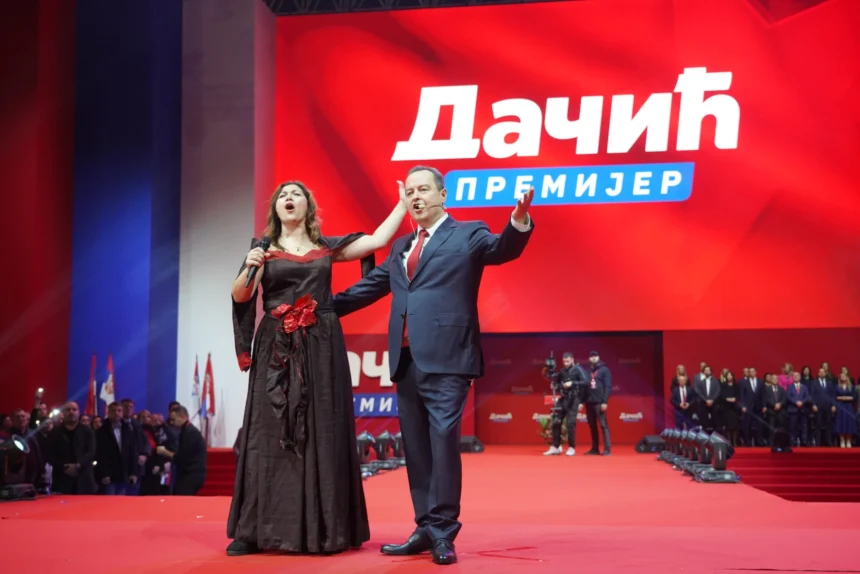
SPS leader Ivica Dačić publicly defended Paunović, reinforcing perceptions that the party is deliberately adopting more radical nationalist messaging as it seeks to reverse a decline in voter support following the 2023 elections.
Political analysts argue that the rhetoric reflects the Socialist Party’s long-standing pragmatic approach to politics. Since its founding in 1990, SPS has spent only three years in opposition, repeatedly adapting its political positions to remain in government through changing alliances.
The party has undergone several ideological shifts over the past two decades. After distancing itself from the nationalist policies associated with the Milošević era, SPS later campaigned on social justice, European integration, and economic reforms before gradually returning to stronger nationalist themes, particularly regarding Kosovo and relations with Russia.
The latest controversy has also exposed divisions within the party. Senior SPS official Branko Ružić criticized Paunović’s remarks, warning that reopening old wounds and introducing inflammatory rhetoric is politically harmful and inconsistent with Serbia’s official policies.
Following disappointing electoral results in 2023, the Socialists have struggled to maintain their traditional support base. Recent polling suggests the party remains above Serbia’s electoral threshold but is no longer the dominant coalition partner it once was, increasing pressure on its leadership ahead of expected elections later this year.
Observers note that the party’s renewed emphasis on Kosovo and nationalist issues appears aimed at appealing to conservative voters, while preserving its position within the ruling coalition led by President Aleksandar Vučić’s Serbian Progressive Party (SNS).