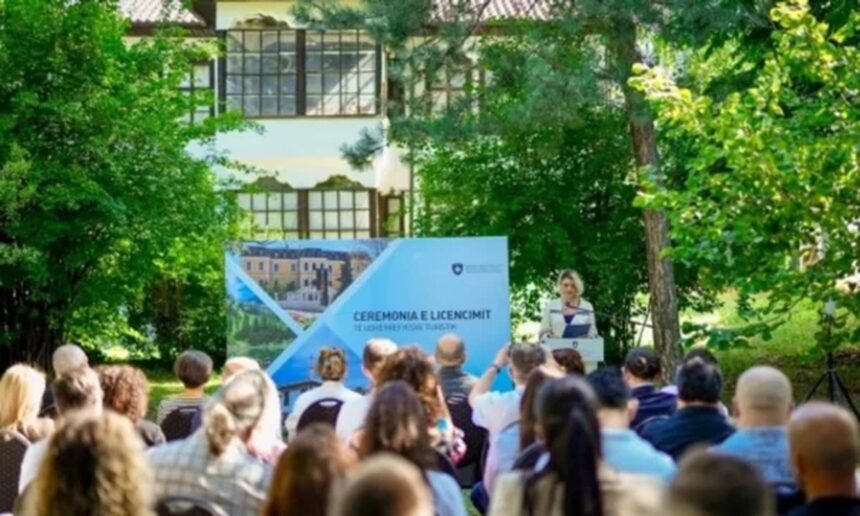
The implementation of Kosovo’s Tourism Law, which takes effect on August 1 and requires all tourist guides to obtain a valid license issued by Kosovo authorities, has drawn sharp criticism from Serbian political leaders and the Serbian Orthodox Church.
Among the strongest reactions came from Miloš Vučević, president of the Serbian Progressive Party (SNS) and regional affairs adviser to Serbian President Aleksandar Vučić. Vučević claimed that the new measures represent an attempt to “erase the Serbian identity” in Kosovo, arguing that the law targets the Serbian Orthodox Church and Serbian pilgrims rather than regulating the tourism sector.
Vučević also criticized the requirement that organized visits to the Visoki Dečani Monastery, Gračanica Monastery, and the Patriarchate of Peć be led by licensed tour guides. He alleged—without presenting evidence—that licensed guides would promote what he described as a “theory of Albanian heritage,” calling the measure an attempt to rewrite history and appropriate Serbian cultural heritage.
The Diocese of Raška-Prizren echoed similar concerns, arguing that religious pilgrimages should not be treated as commercial tourism and insisting that Orthodox monasteries are places of worship rather than tourist attractions.
Kosovo’s government, however, has emphasized that the law applies equally to everyone conducting professional tour-guiding activities in Kosovo, regardless of ethnicity or religion. Officials say the legislation is designed to professionalize the tourism sector, improve service standards, protect cultural heritage, and ensure visitors receive accurate information from certified and licensed guides.
From August 1, individuals operating as tour guides without the required license will face legal penalties under Kosovo’s Tourism Law.
Vučević’s reaction reflects a familiar pattern in Serbian official messaging, where administrative and legal measures adopted by Kosovo are frequently portrayed as attacks on the Serbian community. Critics argue that this narrative serves to reinforce Serbia’s longstanding victimization rhetoric while diverting attention from the fact that the licensing requirement is a general legal standard that applies equally to all tour guides operating in Kosovo.
Here is his original post: