A nearly two-year investigation by Kosovo authorities first led to the arrest of two suspects for alleged war crimes and then to excavation works at a site in Zubin Potok believed to contain a mass grave. Within days, investigators discovered human remains, arrested a third suspect, identified a second suspected burial site, while Serbian authorities arrested a Kosovo citizen on espionage charges.
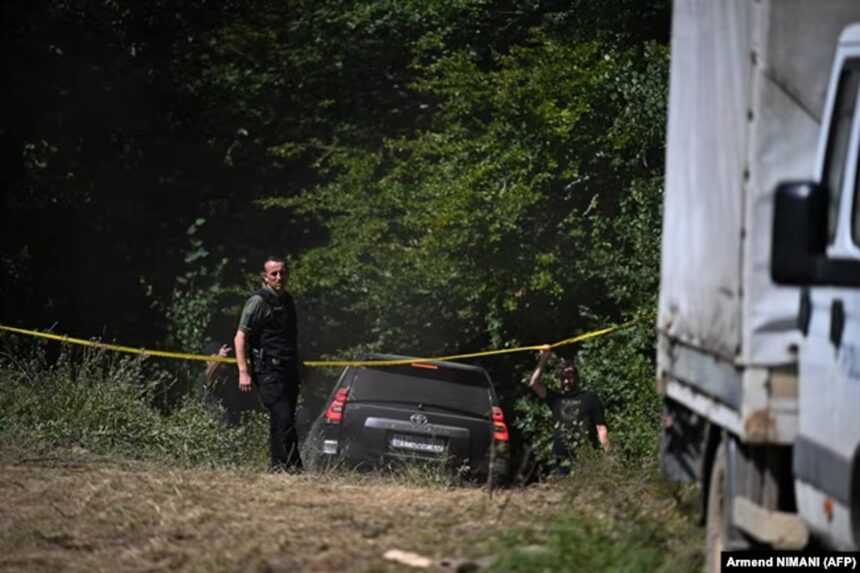
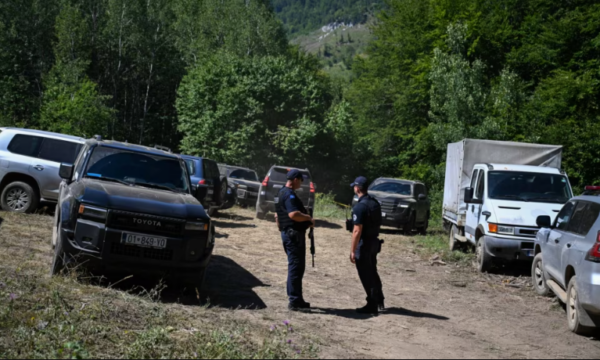
Excavations began on July 28 in the village of Kalludër e Vogël (Mali Kalludra) in Zubin Potok after a lengthy investigation by the Special Prosecution of Kosovo.
Just days before the excavations started, two suspects identified as M.J. and M.B. were arrested on suspicion of war crimes against the civilian population. According to prosecutors, their case is directly linked to the ongoing investigation.
Although authorities have not disclosed the specific allegations, Kosovo Police stated that evidence indicates one of the suspects had been mobilized and served actively in the former Yugoslav Army during the Kosovo war. Both suspects remain in pre-trial detention.
On August 2, Kosovo Police arrested a third suspect, J.R., as part of the same investigation. Prosecutors described the arrest as the result of continued investigative actions but did not provide further details.
Attorney Dejan Vasić, representing suspect M.B., told Radio Free Europe/Radio Liberty that prosecutors allege his client was among those who buried the victims. The lawyer said his client denies any involvement, insisting he was never at the location mentioned by prosecutors.
Meanwhile, attorney Miloš Delević, representing suspect M.J., confirmed only that his client is accused of war crimes against civilians. He previously told Serbian media that the allegations are based on the principle of command responsibility.
What Is Known About the Suspected Mass Grave?
As excavations continued, Kosovo authorities confirmed that the remains recovered from Kalludër e Vogël are of human origin.
From the outset, investigators suspected the site could contain the remains of the so-called “Group of Intellectuals”—a group of Albanian civilians forcibly disappeared on April 19, 1999, including doctors, professors, lawyers, and other professionals.
Acting Prime Minister Albin Kurti said there is an initial suspicion that the remains could belong to this group but stressed that no confirmation is possible until forensic examinations and DNA analysis are completed.
The Institute of Forensic Medicine is now responsible for the identification process, while the Special Prosecution has urged officials, media, and the public not to speculate about the identity of the victims, warning that premature statements could compromise the investigation.
A Second Suspected Mass Grave
On August 2, Kosovo’s Special Prosecution and Police announced that investigators had identified another suspected mass grave site in the nearby village of Jabukë, approximately 10 kilometers from Kalludër e Vogël.
Authorities requested permission from the Basic Court in Pristina to begin excavation and forensic examinations at the new location.
Following a visit to the first excavation site, Kurti stated that the work could continue for weeks or even months, noting that the human remains had been found scattered along a stream.
He once again called on Serbia to open its state and military archives, arguing that they could help clarify the fate of Kosovo’s missing persons.
Acting President Albulena Haxhiu described the discovery of the second suspected burial site as another painful reminder of the crimes committed during the Kosovo war.
Arrest in Serbia
While investigations were ongoing in Kosovo, Serbian authorities arrested a Kosovo citizen from Istog, identified as R.T., on July 30 in Kraljevo on suspicion of espionage.
A Serbian court ordered him held in custody for 30 days, but authorities have released few details regarding the allegations.
However, several sources in Kosovo told Radio Free Europe/Radio Liberty that the arrest is believed to be connected to claims that the individual had provided information leading investigators to the suspected mass grave in Zubin Potok.
Kosovo’s acting Minister for Family, Social Protection, and War Veterans, Andin Hoti, condemned the arrest, calling it “an attempted murder of the truth.”
“This is not a state seeking justice. It is a state apparatus that continues to protect war criminals, intimidate witnesses, and obstruct efforts to uncover the fate of the missing. Every such arrest sends a clear message: anyone who speaks about mass graves will be punished.”
Hoti did not provide evidence supporting the claim that the arrest was linked to the discovery of the suspected mass grave.
According to official figures, 1,579 people remain missing from the 1998–1999 Kosovo war.