Serbian President Aleksandar Vučić has threatened to alter the course of the Ibar River over what he described as the treatment of the Serb community by Kosovo authorities. But engineers, including experts in Serbia, have dismissed the idea as “absurd” and something that “has nothing to do with common sense.”
What would diverting the Iber actually achieve? Is such a project technically feasible, and what consequences could it have for water management, energy supplies, and local communities in Kosovo?
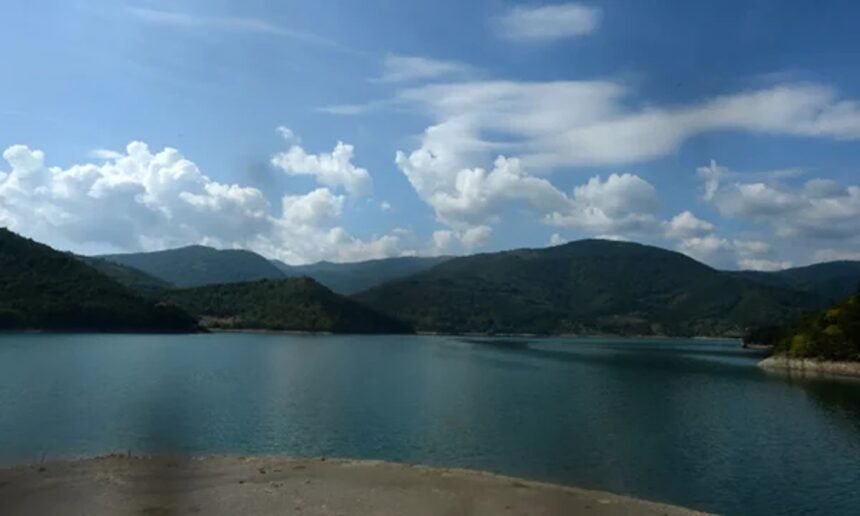
In Kosovo, the Ibar is dammed to form Lake Gazivoda, one of the region’s key water and energy infrastructure facilities. The associated system provides water to local communities and plays an important role in Kosovo’s energy and water supply.
The idea of “diverting” the Ibar is not new. Vučić also raised the proposal in 2024, although he later distanced himself from it, saying he did not want nature to be used for political purposes.
Civil engineer and Serbian professor Jovan Despotović told the newspaper Vreme that Serbia would gain “nothing” from such a project.
“This would be absolutely unacceptable from the standpoint of European Union water law at the level of the Danube River Basin, to which the Ibar belongs. It has nothing to do with common sense. Whatever one might say about it would be too little, because from a hydrotechnical or water-management perspective, it is simply incomprehensible,” Despotović said.
He added that such an undertaking would be an almost unimaginable engineering project and suggested that Vučić may have made the statement “metaphorically.”
Any decision to alter the river’s course would inevitably affect the entire local population in Kosovo, not only Albanians. According to Despotović, Serbia has numerous other, more important and potentially much larger projects that could deliver genuine improvements to its energy and water sectors.
“No one on Earth would allow the Ibar to be diverted,” Despotović said.
The obstacles are not merely technical. They are also legal.
The Iber originates in Montenegro, flows through central Serbia, and then enters Kosovo. Both Serbia and Montenegro are parties to the UNECE Convention on the Protection and Use of Transboundary Watercourses and International Lakes, which requires states to use shared water resources reasonably and cooperate with one another.
Any alteration to the Ibar’s flow would also depend on where the intervention was carried out, the extent to which the river’s course would be changed, and what consequences it would have downstream.
In other words, what may sound like a political threat is far more complicated in reality: the Iber is a transboundary river governed by engineering, environmental and international legal considerations not by political rhetoric.