The case of Nenad Rashković in Zubin Potok has opened a new debate over the way Belgrade uses incidents in Kosovo to construct political narratives and turn them into instruments of state propaganda.
Before the investigations by Kosovo’s institutions had been completed and before the Kosovo Police Inspectorate had published its findings, Serbian officials presented the case as evidence of “systematic violence” against Serbs in Kosovo.
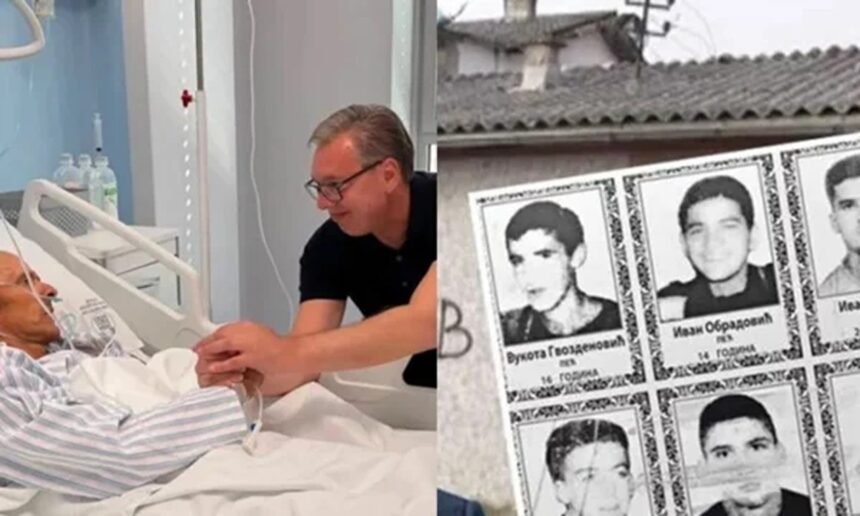
Within hours, the Serb List, officials of Serbian institutions in the north, Serbian media, and President Aleksandar Vučić himself reacted. Vučić even visited Rashković in Belgrade. Allegations of beating and mistreatment were immediately transformed into a central issue in Serbian political discourse.
However, subsequent developments have made the case even more complicated.
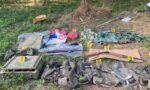
Near Rashković’s properties, the Kosovo Police found weapons and uniforms bearing Serbian symbols—new elements that changed the course of the public debate and raised numerous questions about the circumstances surrounding the incident.
Although the investigation is still ongoing, the way the case was handled by Serbian officials has drawn comparisons with one of the most controversial episodes in Kosovo’s recent history: the “Panda” case.
The massacre at the “Panda” café in Peja in December 1998 was used by Serbian authorities to accuse Albanians and justify subsequent operations by Serbian forces in Kosovo. Years later, however, Aleksandar Vučić himself stated that there was no evidence that Albanians were responsible for the attack. Subsequent investigations by Serbian authorities also concluded that there was no evidence that the crime had been committed by Albanians.
For precisely this reason, analysts and political observers in Kosovo are drawing parallels between the way the “Panda” narrative was constructed and the way the Rashković case is being handled.
The similarity does not necessarily lie in the events themselves, but in the pattern of response.
First, the incident is reported through Serbian media alongside serious accusations against Kosovo’s institutions. Political officials then issue statements portraying the incident as part of an organized policy against Serbs. In the third stage, the case is internationalized through calls for KFOR, EULEX and the European Union to respond immediately. Finally, the narrative becomes a political argument intended to demonstrate that Serbs in Kosovo are victims of an ongoing campaign.
In Rashković’s case, allegations of mistreatment were accompanied by claims that Kosovo Police officers had forced him to confess to war crimes and tied him to a tree. These allegations were widely reported by Serbian media, while the Kosovo Police stated that it had no information indicating that its officers had used violence against anyone.
Meanwhile, the Kosovo Police Inspectorate launched an investigation to establish what actually happened.
The fact that the Serbian president personally became involved in the case and visited Rashković in Belgrade demonstrates the political importance Belgrade is attaching to the incident. This approach is not new.
In the past, Serbia has used various incidents in Kosovo to construct political narratives with significant impact on public opinion, both in Serbia and internationally.
Therefore, the key question is no longer simply what happened to Nenad Rashković.
The question is whether the case is being used to construct another political narrative resembling Belgrade’s previous propaganda models.
The final answer will depend on the findings of the official investigations. Until then, any rushed conclusion risks turning an incident that remains unclear into yet another instrument in the ongoing battle of narratives between Kosovo and Serbia.