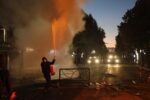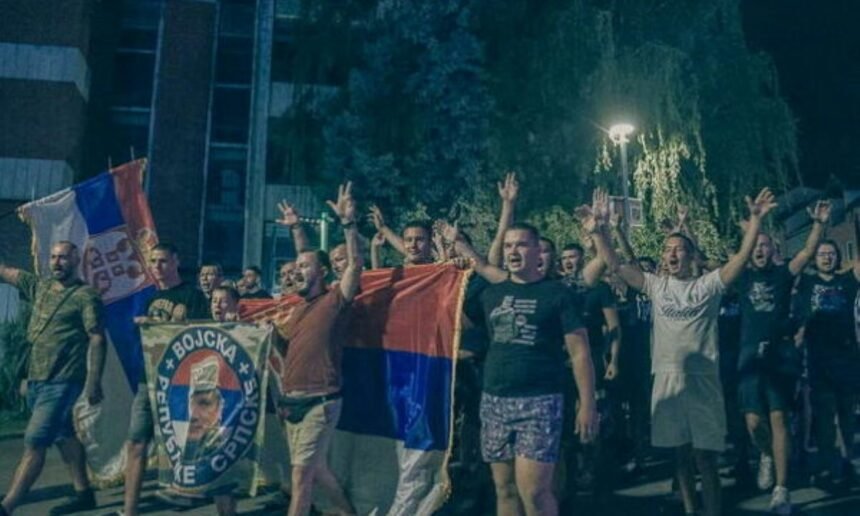
Hundreds of people gathered in the eastern Bosnian town of Zvornik to pay tribute to former Bosnian Serb military commander Ratko Mladić, lighting candles and chanting his name following his death at a Hague detention facility.
Dozens of local Serbs marched through the streets of the town and chanted “Ratko Mladić” in honor of the convicted war criminal, according to local reports.
The scenes have drawn renewed criticism because of Zvornik’s wartime history. Thousands of Bosniaks were expelled from the area during the Bosnian War, while Serb forces committed numerous crimes there in 1992.
In 1995, many of the Bosniak men and boys captured in and around Srebrenica were executed in the Zvornik area. Numerous victims of the Srebrenica genocide were subsequently buried in mass graves around the town.
Mladić, the former commander of the Army of Republika Srpska, died at the age of 84 in The Hague after months of deteriorating health. His death was also confirmed by his family.
His lawyers had previously argued that his condition was “advanced and irreversible” and repeatedly sought his temporary release for medical treatment. The International Residual Mechanism for Criminal Tribunals (IRMCT) rejected those requests, with Mechanism President Graciela Gatti Santana stating that health conditions alone were not sufficient grounds for early release.
Mladić was sentenced to life imprisonment by the International Criminal Tribunal for the former Yugoslavia (ICTY) in November 2017 after being convicted of genocide, crimes against humanity and war crimes committed during the 1992–1995 war in Bosnia and Herzegovina.
His death has triggered sharply contrasting reactions across the region, with victims’ associations and political figures emphasizing the crimes established by international courts, while nationalist groups in Serbia and Republika Srpska have portrayed him as a military and national hero.
The scenes in Zvornik have once again highlighted the unresolved struggle over the legacy of the Bosnian War and the continued glorification of a figure convicted of some of the most serious crimes committed in Europe since World War II.