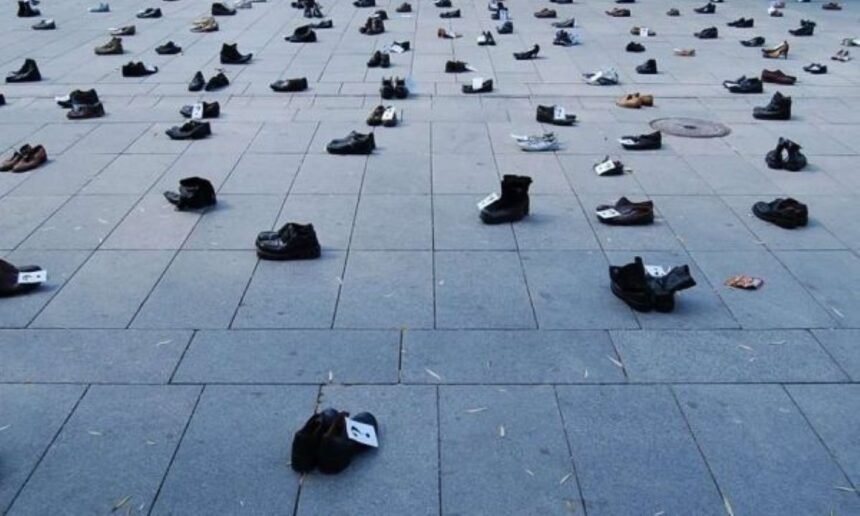
Families of people who went missing during the Kosovo war have renewed calls for Serbia to open its archives, saying access to official records could provide crucial information about the whereabouts of their missing relatives.
Around 1,600 people who disappeared during the war remain unaccounted for in Kosovo, with families continuing to search for answers decades later.
The issue was raised during a public discussion organized by international organizations and attended by families of missing persons to mark the International Day of the Victims of Enforced Disappearances.
Bekim Gashi, from the village of Tërrnje in Suhareka, said he has spent the past 27 years searching for his four sisters and mother, following every lead and visiting mass graves whenever remains were discovered.
“The only address for clarifying the fate of missing persons is the opening of the archives in Serbia,” Gashi said. “I am speaking personally about our case. It is known who committed the crime — the 549th Brigade — and it has records indicating where the bodies of our loved ones are located.”
Gashi also urged institutions and non-governmental organizations not to release unconfirmed names of missing persons, warning that false information can be particularly devastating for families who have spent decades waiting for answers.
Forensic medicine specialist Dritor Haliti explained that identifying remains through DNA analysis is a lengthy process and can take at least three months.
“The first phase at the institute is to immediately take a sample and send it to the International Commission on Missing Persons, where it undergoes systematic analysis to establish a DNA profile,” Haliti said. “That profile is then compared with the data and blood samples provided by family members before a conclusion is reached.”
Bekim Blakaj of the Humanitarian Law Center Kosovo said families have a right not only to recover and bury their relatives with dignity, but also to receive full information about the identification process.
“Families have the right not only to bury their loved ones with the highest honors, but also to know everything about the process and why the search for their family member has taken so long,” Blakaj said.
Human rights organizations emphasized that determining the fate of the approximately 1,600 people still missing from the Kosovo war requires greater access to information and archives held in Serbia.
For families who have waited for more than two decades, the opening of those archives remains one of the key outstanding demands in the effort to establish the fate of their missing relatives.