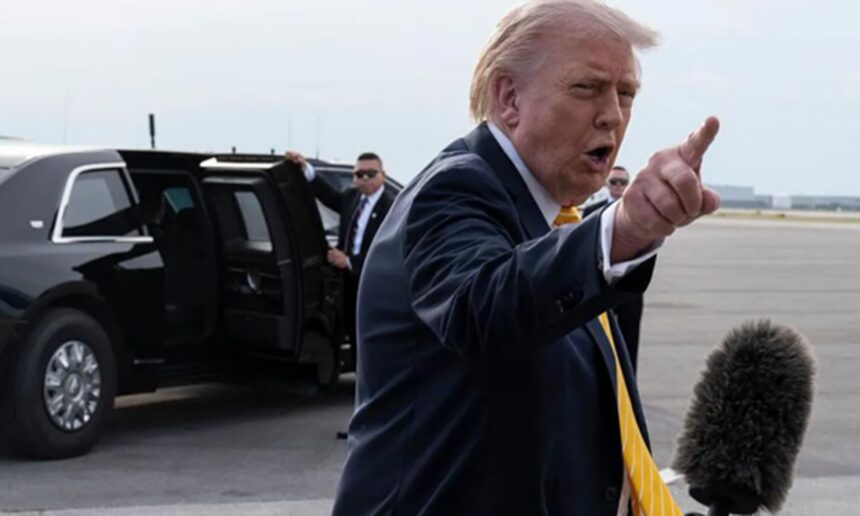
Iran’s Islamic Revolutionary Guard Corps (IRGC) launched ballistic missiles at two US military bases in Jordan following American strikes on Iranian positions on Larak Island, prompting President Donald Trump to warn that Washington would respond forcefully.
Trump said the United States would “hit Iran hard” after the Iranian attack, adding that a response was coming. US officials said most or all of the incoming missiles were intercepted, with no immediate indication of significant damage to US facilities.
The IRGC said it targeted the King Hussein and Al Azraq bases in Jordan in retaliation for US strikes against Iranian rocket launchers on Larak Island, near the Strait of Hormuz. Iran claimed the attack caused significant damage, but those claims were not independently verified.
US-Iran military exchange resumes
The confrontation marked the first known direct exchange of strikes between the United States and Iran in about a month.
US forces struck two Iranian rocket launchers on Larak Island, with US officials saying the systems posed an imminent threat to shipping in the Strait of Hormuz and were allegedly being prepared for operations involving sea mines.
Iran responded by targeting US positions in Jordan. Jordanian authorities said missiles entering the country’s airspace were intercepted, while reports indicated that nearly all missiles directed toward the US facilities were stopped before causing major damage.
The escalation also affected wider regional security, with the United Arab Emirates reporting that it intercepted an Iranian drone over its territorial waters.
Economic pressure on Tehran continues
The military confrontation came as the Trump administration continued to intensify economic pressure on Iran.
US Treasury Secretary Scott Bessent said Washington’s sanctions campaign was placing increasing strain on the Iranian economy and signaled that further measures could follow.
“You’re going to see a lot more of these every week,” Bessent told Reuters ahead of the meeting of G20 finance leaders, referring to the continuing pressure campaign against Tehran.
The renewed exchange of fire has also raised concerns about the security of shipping through the Strait of Hormuz, a vital route for global energy supplies. Market concerns over a wider escalation contributed to declines in several Gulf stock markets.
Despite the latest military escalation, both Washington and Tehran have signaled that they do not necessarily seek a return to full-scale war. However, Trump’s warning of a forceful response and Iran’s pledge to retaliate against further attacks leave the region facing the risk of another rapid escalation.