A BBC investigation has found that a decline in the number of small boats attempting to cross the English Channel is prompting migrant smuggling networks to change their tactics, with criminal groups increasingly turning to larger vessels capable of carrying hundreds of people at once.
The boats, described as “mega-boats,” are allowing smugglers to consolidate larger numbers of migrants into fewer crossings as French authorities intensify efforts to prevent small boats from leaving the northern French coast.
In one recent case, a vessel measuring around 15 meters carried 230 people to the United Kingdom, drawing strong reactions from British politicians and media.
The BBC’s investigation on the French coast found that criminal networks are facing increasing difficulties in obtaining small boats. As a result, groups that previously operated separately are reportedly cooperating to pool migrants and resources for larger crossings.
Crossing costs rise to €2,000
According to BBC sources, intensified French police operations have significantly reduced opportunities for migrants to launch small boats. French authorities say they are intercepting around two-thirds of small boats before they can leave the coast.
The increased pressure has also driven up the price of crossings. Migrants are reportedly now paying as much as €2,000 per person, compared with around €1,300 a year ago. In some cases, smugglers demand payment in cash and in advance.
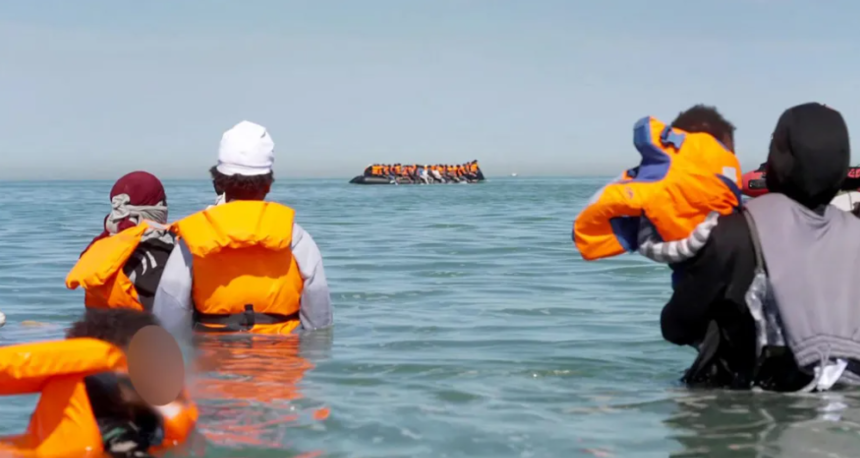
The BBC documented an operation at Gravelines beach in which a small boat made several trips to collect groups of migrants. Eventually, around 82 people boarded the vessel before it headed toward the Channel.
French authorities say intervention becomes particularly difficult once migrants are already at sea because attempts to stop the boats can increase the risk of people falling into the water and drowning.
Migrants wait weeks or months for an opportunity
Stronger enforcement is also extending the amount of time migrants spend waiting for an opportunity to cross. People who previously waited only a few days may now remain along the French coast for weeks or even months.
Weather conditions remain another critical factor. According to the BBC, small-boat crossings are most feasible when winds are below five knots and waves are less than 0.8 meters high.
Some migrants are reportedly avoiding larger camps and instead staying closer to beaches, in forests and among sand dunes in an effort to reduce the risk of detection. This can leave them with less access to food, water and medical assistance.
BBC crew attacked during investigation
The BBC investigation also encountered hostility from people involved in migrant smuggling near Dunkirk.
During filming at one of the camps, a smuggler reportedly attempted to take the BBC crew’s camera before throwing stones at the journalists. The BBC cameraman, identified as Pol, was struck in the face and required several stitches.
The incident reflects growing tensions in the area as French police intensify operations against informal camps and smuggling networks.
Britain and France strengthen cooperation
The United Kingdom and France are introducing additional measures aimed at increasing police presence along the French coast and preventing irregular Channel crossings.
British authorities have welcomed the work of French police, noting that the number of crossings has fallen to its lowest level in six years.
Despite the decline, however, thousands of people continue to reach the UK in small boats. The BBC reports that changes in migration policy, weather conditions and the movement of migrants are making the situation increasingly complex.
For smuggling networks, the growing pressure appears not to have stopped the activity but instead to have pushed them toward new tactics, including the use of larger vessels. While these boats can transport more people in a single journey, they also have the potential to increase the consequences of an accident at sea, further raising concerns over the safety of those attempting the crossing.