In the Western Balkans, particularly in relations between Kosovo and Serbia, artificial intelligence (AI) is intensifying the challenges posed by information manipulation, propaganda, and attempts to influence public opinion.
A particularly significant dimension is the political and media narratives originating from Serbia, especially those concerning Kosovo, interethnic relations, and security.
Internationally, Russia, China, and other state and non-state actors have faced evidence-backed accusations of conducting influence operations. Artificial intelligence is fundamentally transforming how information is produced and distributed, creating opportunities for technological advancement while also enabling manipulation, propaganda, and interference in democratic processes.
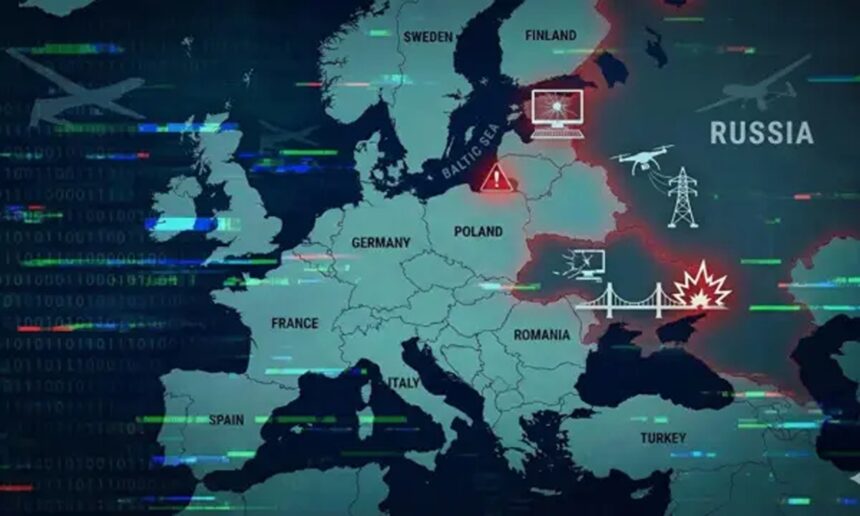
Hybrid warfare combines military and non-military instruments, including cyberattacks, sabotage, economic pressure, and information manipulation. Within this strategy, disinformation seeks to shape how citizens understand events and make decisions.
Rather than changing events themselves, information operations attempt to change how those events are interpreted. Their objective is not necessarily to convince the public of a lie, but to sow doubt about all information. When videos are dismissed as fabricated and journalistic reporting is labelled propaganda, even documented facts struggle to earn public trust.
This threat extends beyond fake news because it undermines society’s ability to engage in debate based on verifiable facts. The objective is not merely to change political beliefs, but also to gradually erode trust in institutions, the media, and information sources.
Reports from European institutions and technology companies indicate that information manipulation operations have become increasingly sophisticated, coordinated, and difficult to detect. In its fourth report on Foreign Information Manipulation and Interference (FIMI), published in March 2026, the European External Action Service (EEAS) found that these operations had reached new levels of complexity and international reach during 2025. This demonstrates that information manipulation can no longer be treated merely as a communications problem or the ordinary spread of false news.
According to the report, information interference has become part of a broader hybrid arsenal in which digital activities can be combined with political pressure, threats, and destabilising actions to achieve strategic objectives. This means that a disinformation operation may not be an isolated activity, but part of a strategy aimed at weakening institutions, deepening social divisions, or influencing a country’s political orientation.
Russia represents one of the most extensively documented cases of information influence operations being used to advance geopolitical objectives. Since the beginning of its full-scale invasion of Ukraine, networks linked to Russian interests have been identified in campaigns aimed at discrediting Ukraine, undermining Western support for Kyiv, and deepening political divisions within democratic societies. These operations go beyond promoting narratives favourable to Moscow; they also involve efforts to undermine trust in Western institutions and influence how the public interprets international developments.
The EEAS’s third report, published in March 2025, identified digital infrastructure used by foreign actors, primarily from Russia and China, to interfere in the information environment of the European Union and partner countries. Documented methods include creating websites that imitate established media outlets, using fake social media profiles, and coordinating the distribution of content designed to resemble independent reporting. These tactics make it more difficult for users to identify the true origins of information.
Artificial intelligence significantly expands these capabilities by enabling the production of large volumes of content in different languages, tailoring messages to specific audience characteristics, and distributing them with fewer resources and less time. As a result, a single narrative can be presented in different forms to different social groups, creating the impression of broad, spontaneous debate even when the content originates from a coordinated operation.
During the 2024 US presidential election, Microsoft’s Threat Analysis Center documented influence attempts by actors linked to Russia, Iran, and China, including the use of fabricated videos, AI-generated content, and cyber operations targeting the electoral information environment. These cases do not establish that foreign interference determined the election outcome. Rather, they demonstrate that digital manipulation has become a tool used to influence political debate and public perceptions.
Another concern involves the use of artificial intelligence to impersonate real people and exploit their authority. Deepfake technology enables the creation of convincing videos and audio recordings depicting individuals saying or doing things that never happened. In politically polarised environments, such material can trigger immediate reactions before its authenticity is verified.
However, the danger lies not only in the fabrication of evidence. The spread of AI-generated content can also allow individuals or institutions to dismiss authentic material by claiming it has been manipulated. This phenomenon, known in disinformation studies as the liar’s dividend, creates an advantage for those seeking to evade accountability. The more fabricated material circulates in the public sphere, the easier it becomes to cast doubt on genuine evidence.
In this way, information manipulation can operate in two directions simultaneously: making lies appear credible while making the truth appear questionable. This represents one of the most serious challenges facing journalism, institutions, and democratic debate.
AI-driven automation further strengthens this mechanism, allowing influence networks to produce thousands of variations of the same narrative and adapt them to different audiences’ languages, cultures, and concerns. OpenAI’s February 2026 report on malicious uses of artificial intelligence found that threat actors typically combine AI models with traditional tools, including websites and social media accounts. Their operations can extend across multiple platforms and use different technological models.
This demonstrates that artificial intelligence has not replaced traditional propaganda; rather, it has accelerated and expanded it, enabling influence operators to produce more content and reach wider audiences.
China represents another dimension of digital competition. Reports by Microsoft and the EEAS have identified operations linked to Chinese actors that seek to influence international perceptions, exploit social polarisation, and promote narratives aligned with Beijing’s strategic interests. Although these operations differ in methods and objectives from those associated with Russia, both cases demonstrate that the information environment has become an arena of strategic competition among major powers.
For the Western Balkans, these developments are particularly significant. The region continues to face ethnic tensions, political disputes, external influences, and debates over its Euro-Atlantic orientation. In such an environment, a fabricated statement by an official, a manipulated video of a protest, or false information about a security incident can create uncertainty and provoke public reactions before the facts are verified.
One particularly sensitive dimension of this confrontation concerns relations between Serbia and Kosovo. Political disputes and tensions arising from Serbian illegal structures influenced by Belgrade have created an environment conducive to the spread of disinformation.
Research published in 2026 indicates that narratives originating from Serbian and Russian sources remain an important part of Kosovo’s information environment. These narratives frequently focus on interethnic relations, the security of the Serb community, the actions of Kosovo’s institutions, and the role of international actors. The way they are presented can create the impression of a broader crisis than the verified facts support.
One of the most significant studies was published on March 27, 2026, by BIRN Kosovo and Internews Kosovo under the title Mapping Disinformation: Russian and Serbian Narratives in the Media and Social Networks in Kosovo.
The study examined how misleading narratives, primarily originating from Russian and Serbian sources, exploit interethnic tensions, fuel uncertainty, and undermine social cohesion. Researchers monitored four Kremlin-controlled media outlets that published 1,323 items about Kosovo between September 2025 and February 2026. They also examined 150 platforms and social media accounts, identifying more than 20,000 suspicious links. Of the material collected, 2,361 articles were selected for in-depth analysis.
These findings indicate that information influence is not limited to an isolated political statement or a single false news report. Instead, it can operate through an ecosystem of media outlets, platforms, and accounts that reproduce similar narratives. When a claim is repeated by multiple sources, it can gain visibility and credibility among the public, even when those sources provide no independent evidence to substantiate it.
A concrete example from 2026 concerns the debate over Kosovo’s Law on Foreigners, which became part of the political and information confrontation between Pristina and Belgrade. During the UN Security Council meeting on April 9, Serbia’s Foreign Minister Marko Đurić made allegations of arbitrary arrests, institutional pressure, and the displacement of Serbs from Kosovo. Russia’s representative, Vassily Nebenzia, accused Kosovo’s institutions of pursuing policies that, in his account, aimed at the ethnic cleansing of the non-Albanian population in the north.
In an analysis published on May 6, BIRN journalists at Prishtina Insight argued that these claims relied on recurring narratives and that portraying the Law on Foreigners as an instrument for expelling Serbs did not reflect the administrative nature of the legal measures.
The significance of this case also lies in how statements made at an international forum were reproduced throughout the Serbian media environment. According to BIRN’s research, Serbia’s public broadcaster RTS and other outlets, including Pink.rs, gave prominence to allegations about the displacement of Serbs and continued pressure against them. In this way, a political interpretation presented at the Security Council can become a recurring media narrative, influencing audiences in Serbia, the Serb community in Kosovo, and international audiences without direct knowledge of conditions on the ground.
Another example concerns how security issues and military cooperation in the region are portrayed by some Serbian and Russian media outlets. In February 2026, the fact-checking platform The Geopost analysed reports that presented military cooperation between Kosovo, Albania, and Croatia through threatening interpretations directed at Serbia. In other cases documented during August, outlets such as Sputnik and RT Balkan used alarmist language to describe developments in northern Kosovo, including property issues around Lake Ujman and the situation near the bridge over the Iber River. These examples illustrate how administrative, political, or security developments can be presented in ways that reinforce the perception of a persistent threat.
The danger becomes even greater when these narratives are combined with manipulated visual content. In September 2026, The Geopost identified an Instagram post that falsely presented footage from Pristina as showing movement towards North Mitrovica. In an environment where inaccurate information can escalate interethnic tensions, changing the context of a video can create the impression of a new security development, even when the footage does not substantiate the claim being made.
This case does not establish that artificial intelligence was used, but it demonstrates that manipulation of context remains an important disinformation technique, one that emerging technologies can make even more convincing.
Meanwhile, the use of artificial intelligence in Kosovo’s information environment is no longer merely a theoretical possibility. In an analysis published in April 2026, the European Union Office in Kosovo referred to a Hibrid.info report on disinformation during the most recent electoral processes of late 2025. It noted that, alongside fake news, fabricated opinion polls, and unverified statements, there had been an increase in AI-generated content.
The report also identified narratives circulated by Serbian- and Russian-language media that sought to influence public debate, increase polarisation, and cast doubt on the legitimacy of Kosovo’s institutions.
Monitoring conducted by the organisation Sbunker for January–March 2026 likewise documented an intensification of disinformation, increasingly sophisticated manipulation techniques, a rise in propaganda on Telegram, and the emergence of misleading AI-generated content. According to the monitoring, the use of emotionally charged and divisive language was another characteristic of content intended to influence public debate.
These developments demonstrate that Kosovo’s challenge is not simply to counter a particular political narrative originating from Serbia or Russia. It is also to build the capacity to identify how manipulative content is produced, distributed, and amplified. In an information environment where political statements can be reproduced by numerous media outlets, authentic footage can be taken out of context, and artificial intelligence can generate convincing material, fact-checking becomes an essential component of democratic security.
For Kosovo, protection against information manipulation is not solely a matter of responding to foreign propaganda. It also requires strengthening independent journalism, institutional transparency, and public trust. In an environment where false information can spread within minutes while verification requires time and evidence, safeguarding the credibility of facts becomes just as important as identifying the source of manipulation.