More than 28 years after the massacre in Prekaz, a case that has remained one of the darkest chapters of the Kosovo war has finally reached a major legal milestone.
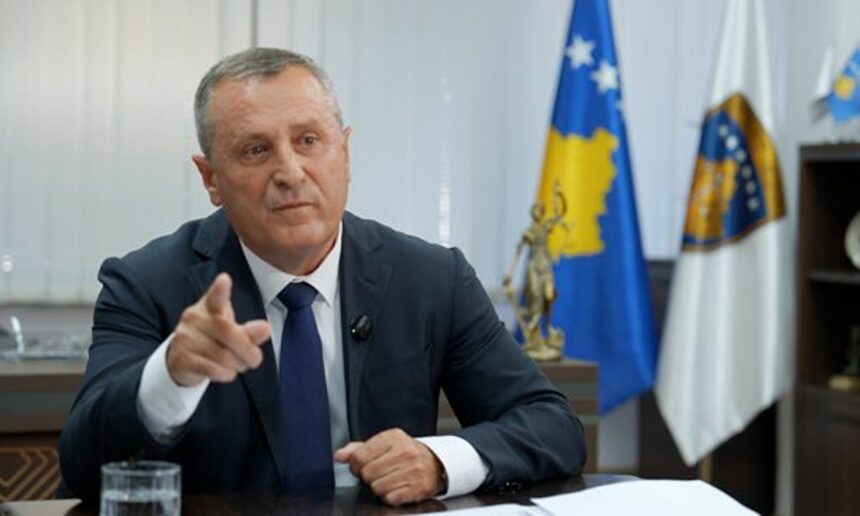
The Special Prosecution Office of the Republic of Kosovo has filed an indictment concerning war crimes committed against civilians in the Jashari neighbourhood in Prekaz, Chief Prosecutor Blerim Isufaj announced on Friday.
“This indictment concerns the killing of civilians in the Jashari neighbourhood in Prekaz. The indictment is based on evidence,” Isufaj said during a press conference.
The prosecution described the indictment as the first case specifically connected to the killing of civilians in the Jashari neighbourhood.
Isufaj did not disclose further details, stressing that the case remains subject to legal proceedings and that investigators cannot reveal information that could compromise the case.
But the significance of the moment is difficult to overstate.
A crime that has waited for justice
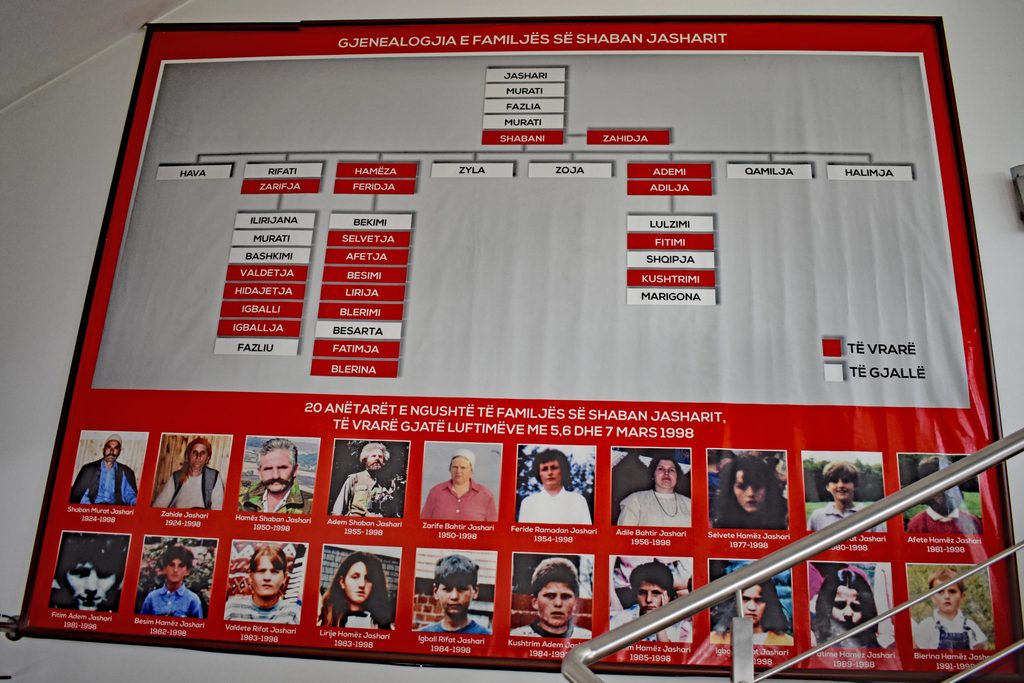
In March 1998, Serbian forces attacked the Jashari family compound in Prekaz. The assault lasted for three days, from March 5 to March 7.
Dozens of members of the extended Jashari family were killed, including women, children and elderly civilians. Among those killed were Adem Jashari, one of the founders and commanders of the Kosovo Liberation Army, his father Shaban and his brother Hamzë.
For more than two decades, the question of individual criminal responsibility for the killings remained unresolved in Kosovo’s courts.
That began to change this year.
In July, Isufaj said the investigation was approaching completion and that an indictment would follow if prosecutors had secured sufficient evidence. He described the case as highly sensitive and requiring particular caution.
Now, the prosecution says that threshold has been reached.
Evidence, not politics
The indictment is significant precisely because it places the events of Prekaz within a formal judicial process.
Isufaj stressed that the prosecution is committed to pursuing war crimes wherever there is a legal basis and sufficient evidence.
“The Special Prosecution remains committed to the rule of law and to the criminal prosecution of all persons for whom there is a legal basis and sufficient evidence,” he said.
The case will now move into the judicial process, where evidence and individual responsibility will be examined according to law.
That distinction matters.
Justice for the victims of Prekaz should not depend on political rhetoric or competing historical narratives.
It should depend on evidence, accountability and the rule of law.
A long-awaited step
The filing comes more than 28 years after the killings, making the delay itself part of the story.
Kosovo’s justice institutions inherited many unresolved war-crimes cases after UNMIK and EULEX previously handled such investigations. Since 2018, responsibility for prosecuting war crimes has increasingly rested with Kosovo’s domestic institutions.
The case against those allegedly responsible for the crimes in Prekaz is therefore not simply about the past.
It is also about whether victims of the Kosovo war can finally see accountability pursued through functioning institutions.
For the Jashari family and the wider Kosovo society, the indictment cannot bring back those who were killed.
But it can do something that has been missing for far too long:
put alleged perpetrators before the law and allow the evidence to speak.
After decades of waiting, the road to justice for Prekaz has finally entered a new stage.
The victims have been remembered for generations. Now, the justice system must ensure that their deaths are also fully investigated, documented and, where proven in court, punished.